A collision can bend, shift, twist, or damage a vehicle’s structural foundation even when the exterior damage appears limited. Changes to a frame or unibody structure may affect panel alignment, door operation, suspension mounting points, steering, tire wear, and the placement of cameras or sensors. OC Auto Body Shop provides professional auto frame repair in Orange County from our Fullerton facility.
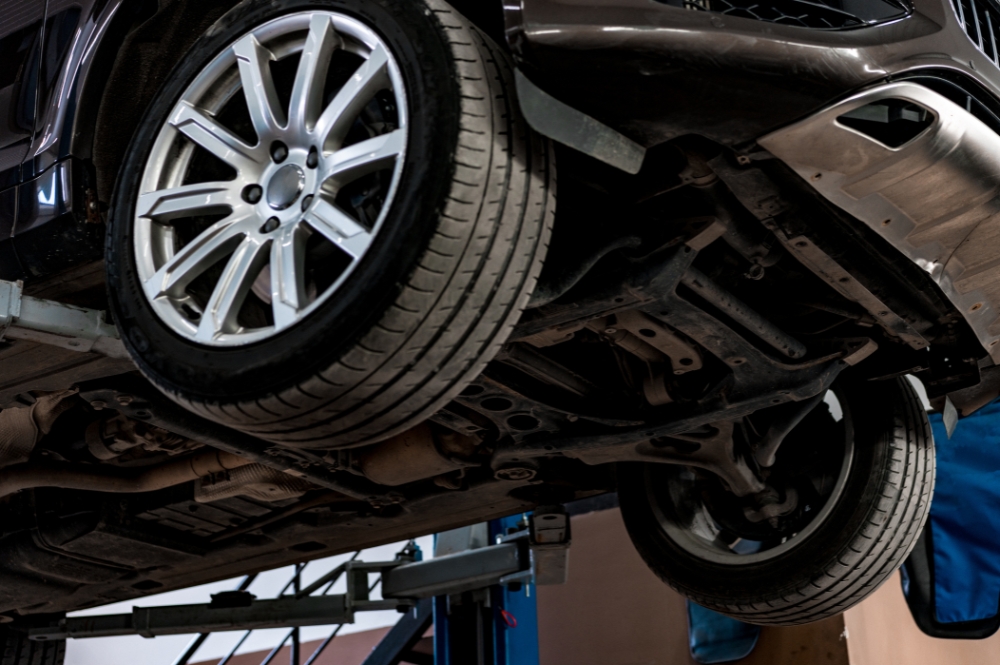
Auto frame damage cannot always be diagnosed through photographs or a visual inspection alone. The vehicle may require disassembly, structural measurements, diagnostic scanning, and evaluation of the wheels, suspension, body panels, and electronic systems. Our team examines the complete affected area before developing a repair plan based on the vehicle’s construction and damage.
What Is Auto Frame Repair?
Auto frame repair is the process of identifying and correcting collision-related damage to the structural sections that support a vehicle. Depending on the vehicle, the work may involve a separate full frame, an integrated unibody structure, or a mixed-material body assembly.
Auto frame repair may include:
- Collision-damage inspection
- Vehicle disassembly
- Three-dimensional structural measurement
- Frame or unibody straightening
- Structural component replacement
- Welding or another approved joining method
- Panel alignment and test-fitting
- Corrosion-protection restoration
- Wheel and suspension evaluation
- Diagnostic scanning
- Camera or sensor calibration
- Final measurement and inspection
Not all structural damage should be repaired in the same way. The vehicle’s materials and manufacturer procedures help determine whether a damaged area may be straightened, requires partial replacement, or must be replaced completely.
How Does a Vehicle Frame Work?
A vehicle’s structure provides the foundation for body panels, doors, glass, suspension components, steering parts, drivetrain mounting points, restraint systems, and other assemblies. Correct structural dimensions also help exterior panels and mechanical components fit in their intended positions.
Structural sections vary by vehicle. Some areas support loads, some provide mounting points, and others manage collision forces. This is why frame repair requires accurate identification of the damaged components and the proper repair procedure.
Don’t evaluate a structural repair based only on how straight the exterior panels look. You must also consider measurements, component fit, system operation, and vehicle-specific requirements.
What Is the Difference Between Full-Frame and Unibody Repair?
“Auto frame repair” is commonly used as a general term, but full-frame and unibody vehicles have different construction.
Full-Frame Vehicles
A full-frame or body-on-frame vehicle has a separate structural frame beneath the body. Many trucks and larger SUVs use this type of construction.
A collision can affect the frame rails, crossmembers, brackets, suspension mounting locations, and other structural parts. The repair may involve measurement, controlled straightening, or replacement of damaged components, depending on the manufacturer’s instructions.
Unibody Vehicles
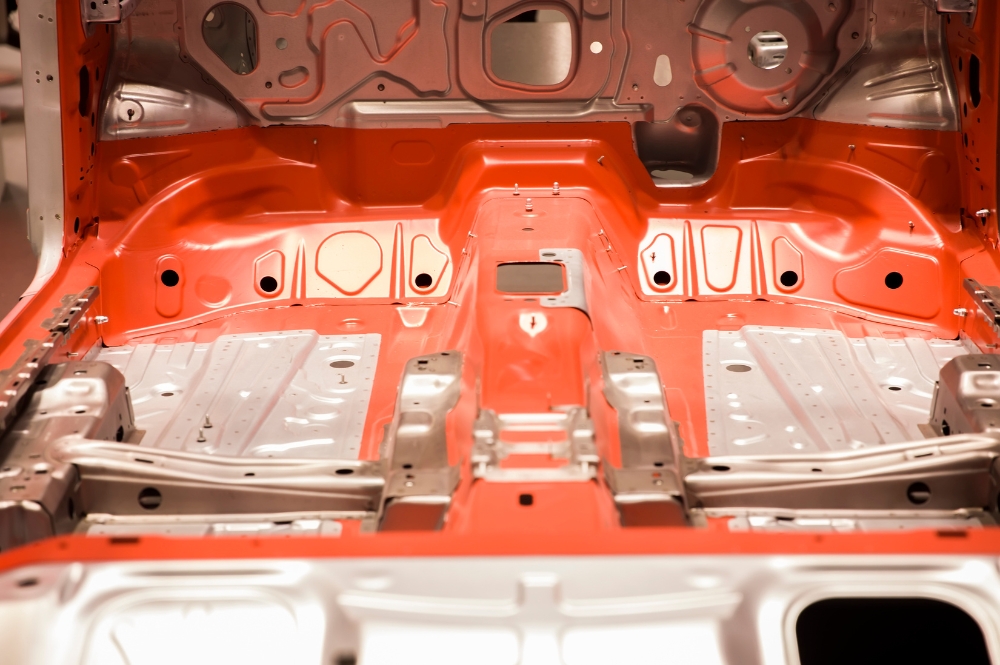
Most passenger cars and crossovers use unibody construction. The floor, roof rails, pillars, rocker panels, front and rear rails, and other structural sections form an integrated body.
Because the sections are connected, collision force can move areas beyond the most visible point of impact. Unibody repair may require measuring length, width, and height to identify changes that aren’t visible from the outside.
Mixed-Material Structures
Modern vehicles may combine mild steel, high-strength steel, ultra-high-strength steel, aluminum, and composite materials. Each material has different repair limitations.
Some materials may be repairable using specific procedures, while others require replacement. Applying heat, straightening, welding, or sectioning without confirming the correct procedure may result in an inappropriate repair.
What Types of Auto Frame Damage Can Occur?
Structural damage varies according to the direction, force, and location of the collision. More than one type of movement may occur during the same accident.
Sagging
Sagging occurs when a structural area moves downward or loses its intended height. It may affect panel alignment, suspension position, or how the vehicle sits.
Mash Damage
Mash damage occurs when a structural section becomes shorter due to front-end or rear-end collision force. Rails, supports, and surrounding panels may buckle or compress.
Sideways Movement
A side impact or angled collision can move structural points laterally. The vehicle may show uneven panel gaps, door-opening problems, or differences in wheel position.
Twisting
Twisting occurs when structural points move in different directions or planes. It may create uneven height measurements or cause panels and openings to fit differently from one side of the vehicle to the other.
Diamond Damage
Diamond-type damage may occur when one side of the structure shifts farther forward or backward than the other. Accurate diagonal and three-dimensional measurements are needed to identify this condition.
These terms describe general patterns, but each damaged vehicle requires an individual measurement and repair strategy.
What Are the Warning Signs of Auto Frame Damage?
Structural damage may create visible or driving-related symptoms. However, these signs can also result from damaged wheels, tires, suspension components, steering parts, or exterior panels.
Possible signs include:
- Uneven gaps around doors, fenders, or the hood
- Doors, trunk, or hood that do not close correctly
- A vehicle that pulls or tracks to one side
- An off-center steering wheel
- Rapid or uneven tire wear
- Wheels that appear out of position
- Visible bends, buckles, or cracked coatings
- Misaligned bumpers or lights
- New wind noise or water leaks
- Unusual rattles or vibration
- Difficulty completing a wheel alignment
- Warning lights after an accident
A vehicle can also have structural movement without obvious symptoms. Measurement may be appropriate after a significant front, rear, side, or offset collision.
Can Minor Accidents Cause Frame Damage?
Yes, some lower-speed accidents can affect structural mounting points, frame ends, bumper supports, or unibody sections. The likelihood depends on the collision angle, vehicle design, point of contact, and objects involved.
A bumper cover can sometimes move back toward its original shape after impact while brackets, reinforcement components, or nearby structural areas remain damaged. Similarly, a wheel striking a curb can transfer force into suspension and mounting locations.
Not every small dent indicates frame damage, but you should inspect for misalignment, steering changes, wheel-position differences, or a strong impact.
Can a Bent Auto Frame Be Repaired?
Some bent frames and unibody sections can be repaired through controlled straightening. Other components must be replaced because of their material, damage location, or manufacturer restrictions.
Repairability depends on:
- Vehicle year, make, and model
- Full-frame or unibody construction
- Structural material
- Location of the damage
- Amount of bending or twisting
- Presence of cracks, tears, or buckling
- Previous structural repair
- Manufacturer repair procedures
- Available replacement parts
- Total cost of the repair
The size of the visible bend does not determine repairability on its own. A small deformation in a restricted material or critical location may require replacement, while a larger change in another approved area may be repairable.
When Must a Structural Component Be Replaced?
Replacement may be necessary when the damaged component cannot be straightened using an approved method or cannot meet the required measurements after correction.
A component may require replacement when:
- The material is not approved for straightening
- The section is torn or cracked
- Severe buckling has occurred
- The part has been stretched extensively
- An attachment point is damaged
- The area was previously repaired
- Heat would be required but is prohibited
- No approved straightening procedure exists
- The manufacturer specifies replacement
- The repair cannot produce the required fit
Replacement procedures may involve an entire structural component, a partial replacement at factory seams, or approved sectioning at specified locations. The correct method varies by manufacturer and model.
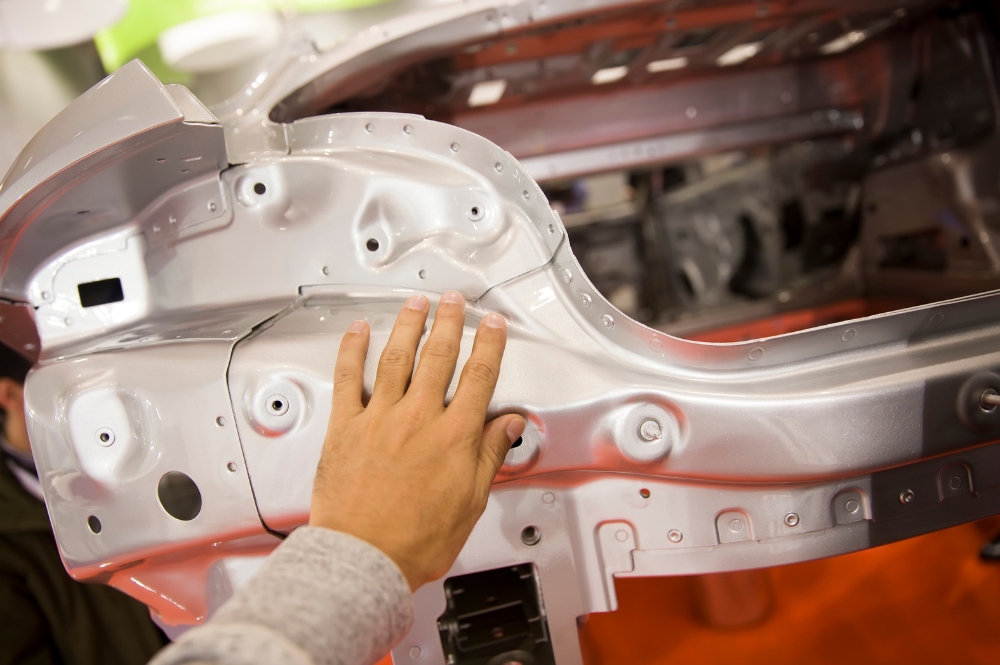
How Is Auto Frame Damage Measured?
Structural measurement compares selected points on the damaged vehicle with that model’s specifications. The process helps identify changes in length, width, height, and diagonal relationships.
Measurements may be taken:
- Before disassembly
- After damaged panels are removed
- Before straightening begins
- During controlled correction
- Before replacement parts are attached
- During panel test-fitting
- After structural work is completed
- Before final wheel alignment or calibration
Modern vehicles may have tight tolerances and nonadjustable suspension, hinge, or sensor mounting locations. I-CAR repair guidance emphasizes following vehicle-maker measurements and checking structural points throughout the repair process.
What Is Auto Frame Straightening?
Auto frame straightening uses anchoring, measuring, and controlled pulling equipment to correct approved structural areas. Technicians secure the vehicle so they can apply planned force without moving unrelated areas.
Technicians monitor the repair through repeated measurements. Technicians may apply force in stages and from more than one direction, depending on the collision damage.
Frame straightening is not simply pulling a visible bend until the panel looks better. The process must consider structural reference points, material behavior, adjoining components, and the vehicle-specific repair plan.
Some materials or structural components cannot be straightened and must be replaced. The manufacturer’s repair information determines the permitted approach.
Is Frame Straightening the Same as Wheel Alignment?
No. Frame straightening corrects approved structural areas, while wheel alignment adjusts specific suspension angles.
If a structural or suspension mounting point has shifted, a wheel alignment alone may not correct the underlying problem. Damaged control arms, struts, tie rods, wheels, tires, or steering components may also prevent a proper alignment.
Address structural dimensions and damaged components before relying on the final alignment to evaluate how the vehicle tracks. OC Auto Body Shop can coordinate structural work with wheel repair and related collision services.
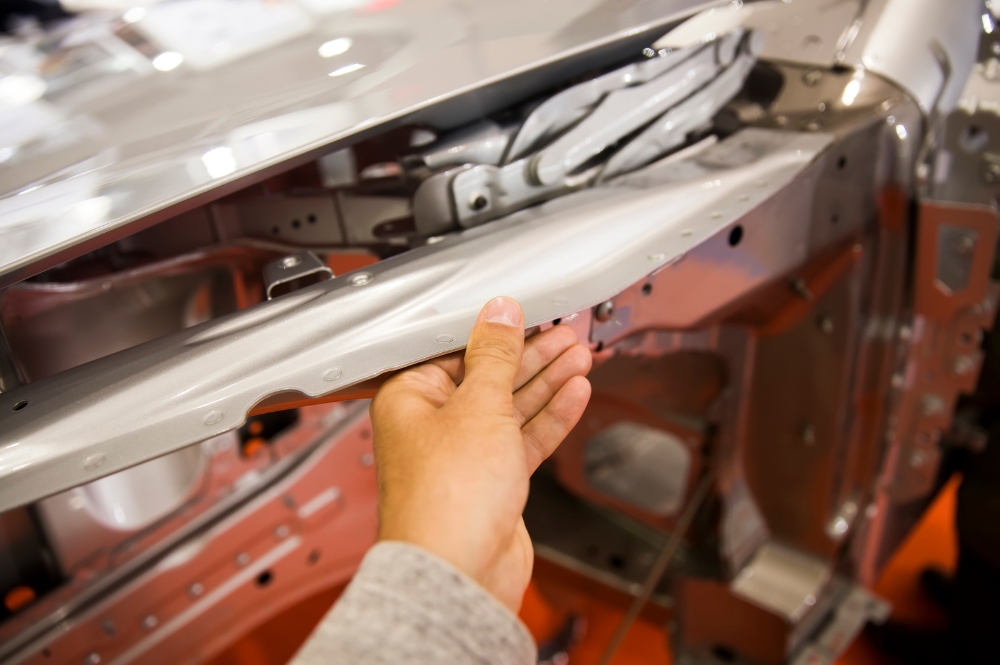
Our Auto Frame Repair Process
Initial Vehicle Inspection
We begin by examining the impact point and surrounding areas. We inspect panel gaps, doors, bumpers, lights, wheels, suspension-related areas, glass, and visible structural sections.
We also document steering concerns, warning lights, fluid leaks, unusual noises, and other symptoms reported after the accident.
Disassembly and Damage Discovery
We may need to remove bumpers, exterior panels, trim, lights, interior components, or mechanical parts to expose the damaged structure.
Disassembly can reveal bent supports, damaged reinforcement parts, broken brackets, distorted rails, wiring issues, or movement hidden beneath the exterior.
Diagnostic Scanning
Depending on the vehicle and collision, diagnostic scanning may identify stored fault information. A collision can affect electronic modules, sensors, cameras, wiring, and driver-assistance features even when a warning light is not immediately visible.
Scanning helps identify systems that may require additional testing, repair, programming, or calibration.
Structural Measurement
Reference points are measured and compared with the applicable vehicle specifications. The measurements help determine the type and direction of structural movement.
The repair plan is then updated to reflect the confirmed damage. Additional insurance documentation may be prepared if the original estimate did not include structural issues.
Vehicle-Specific Repair Planning
The structural materials and manufacturer procedures are reviewed before straightening or replacement begins. The repair plan identifies permissible repair areas, required replacement sections, approved attachment methods, and related precautions.
The procedure for one vehicle should not automatically apply to another, even when the damage appears similar.
Anchoring and Structural Correction
When straightening is permitted, secure the vehicle and apply controlled force to the damaged structure. Measurements are checked during the process to monitor movement and reduce the possibility of overcorrection.
Damaged areas may require several controlled adjustments rather than one strong pull.
Structural Part Replacement
Remove and replace components that cannot be repaired using the applicable procedure. The work may involve welding, riveting, bonding, or a combination of joining methods.
Position and measure replacement parts before permanent installation. Related exterior panels may also be test-fitted to confirm alignment.
Corrosion Protection
Structural work can disturb factory coatings, seam sealers, adhesives, cavity protection, and corrosion-resistant finishes. We must restore these materials as required for the repair location.
Corrosion protection is part of the structural repair process, even though much of it may not be visible after reassembly.
Body Repair and Refinishing
We repair, align, or replace exterior panels damaged in the collision. The work may include dent and scratch repair, bumper repair or replacement, and panel refinishing.
Our auto body painting services include surface preparation, color evaluation, paint application, clear coat, curing, and final finishing.
Reassembly and System Service
We reinstall trim, lights, wiring, mechanical parts, sensors, cameras, and other removed components. Depending on the repair, we may need diagnostic scans, wheel alignment, testing, aiming, or calibration.
Correct structural geometry is important before completing procedures that depend on the position of wheels, suspension components, cameras, or radar-related equipment.
Final Measurement and Inspection
The repaired vehicle receives final structural measurements and inspection. Technicians check panel fit, door operation, body gaps, repaired areas, warning indicators, and included systems.
The customer is informed about the repairs performed and any relevant care or warranty information.
How Does Auto Frame Repair Affect Driver-Assistance Systems?
Driver-assistance systems may depend on cameras, sensors, radar-related equipment, steering information, ride height, wheel alignment, and precise mounting locations.
Structural movement can change a component’s position or angle even if it isn’t visibly broken. Repairs involving the frame, unibody, suspension, bumper, windshield, or sensor brackets may therefore require calibration or testing.
Complete structural corrections before calibrations that depend on vehicle geometry. The required procedure varies by vehicle and installed equipment.
Auto Frame Repair After Front-End Accidents
A front-end collision can affect front rails, apron structures, radiator supports, suspension mounting areas, bumper reinforcements, crossmembers, and adjoining panels.
Related damage may involve:
- Hood and fenders
- Bumper and grille
- Headlights
- Cooling components
- Wheels and suspension
- Sensors and cameras
- Engine-bay components
- Wiring and electrical connections
Front structural repairs may need to be coordinated with complete collision repair, painting, wheel service, and electronic-system procedures.
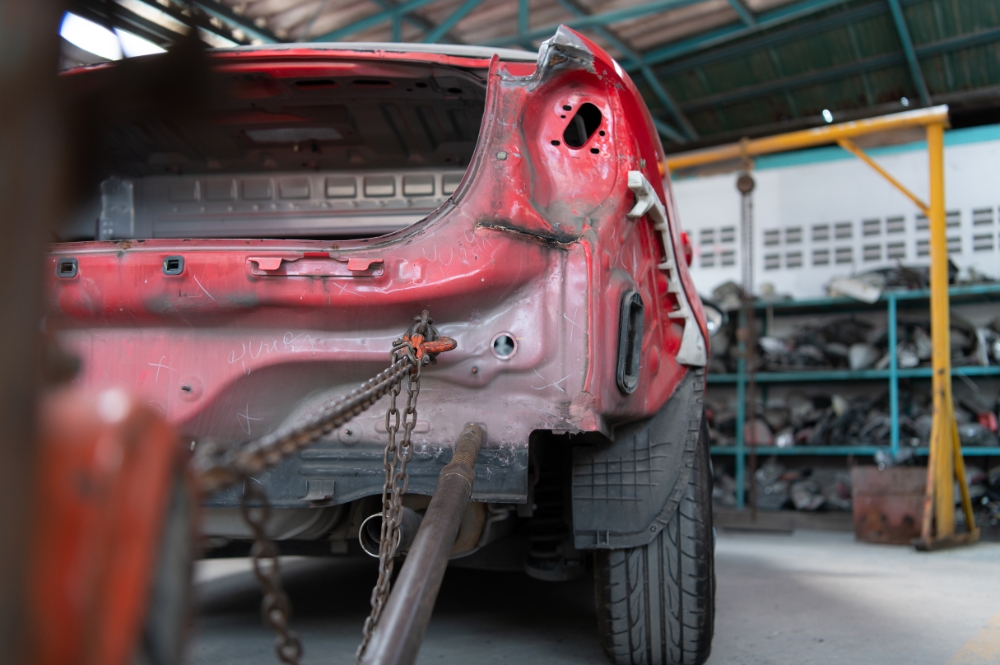
Auto Frame Repair After Rear-End Accidents
Rear-end collisions may affect rear rails, the trunk floor, rear body panel, bumper reinforcement, quarter-panel structures, liftgate or trunk openings, and suspension-related areas.
A damaged bumper cover may conceal changes behind it. Uneven gaps, water leaks, trunk-closing problems, or a bumper that no longer aligns with the quarter panels can indicate the need for further inspection.
The repair plan may include structural correction, bumper service, body-panel replacement, painting, sensor evaluation, and lighting repair.
Auto Frame Repair After Side-Impact Accidents
Side-impact collisions can damage rocker panels, door openings, pillars, roof rails, floor sections, quarter-panel structures, and suspension mounting areas.
Because these structural sections surround the doors and passenger compartment, evaluate repairability using procedures specific to the vehicle. Side damage may also affect windows, locks, weather seals, seat-related wiring, and electronic components.
The repair may involve structural replacement, panel alignment, joining procedures, refinishing, diagnostic scanning, and final measurement.
How Long Does Auto Frame Repair Take?
The repair timeline depends on the type and extent of structural damage. A limited correction generally requires less time than a repair involving multiple structural sections, suspension damage, replacement parts, and extensive body refinishing.
The schedule may be affected by:
- Vehicle disassembly
- Structural measurement
- Repair-procedure research
- Number of damaged areas
- Parts availability
- Welding or bonding requirements
- Suspension and wheel damage
- Paint preparation and curing
- Diagnostic scanning
- Sensor calibration
- Insurance approval
- Additional concealed damage
We can provide a more reliable timeframe after disassembly, measurement, and confirmation of the complete repair plan.
Will Insurance Cover Auto Frame Repair?
Insurance may cover auto frame repair when the structural damage results from a covered collision or other insured event. Coverage depends on the policy, deductible, accident details, repair estimate, and insurer’s decision.
The initial insurance estimate may not include structural damage concealed behind exterior parts. If the repair facility discovers additional covered damage, it may submit a supplement with measurements, photographs, procedures, parts, and labor information.
OC Auto Body Shop works with major insurance companies and can provide repair documentation. Vehicle owners should confirm their coverage, deductible, rental benefits, and claim status directly with their insurers.
Does Frame Damage Mean the Vehicle Is a Total Loss?
Frame damage does not automatically make a vehicle a total loss. The decision generally considers the vehicle’s value, repair cost, damage severity, parts availability, policy terms, and the insurer’s evaluation.
A vehicle may be structurally repairable but economically impractical to repair. The complete estimate may include structural work, body panels, paint, suspension, wheels, glass, electronics, scanning, and calibration.
OC Auto Body Shop can identify and document the required repairs, while the insurance company decides whether to repair the vehicle or declare it a total loss.
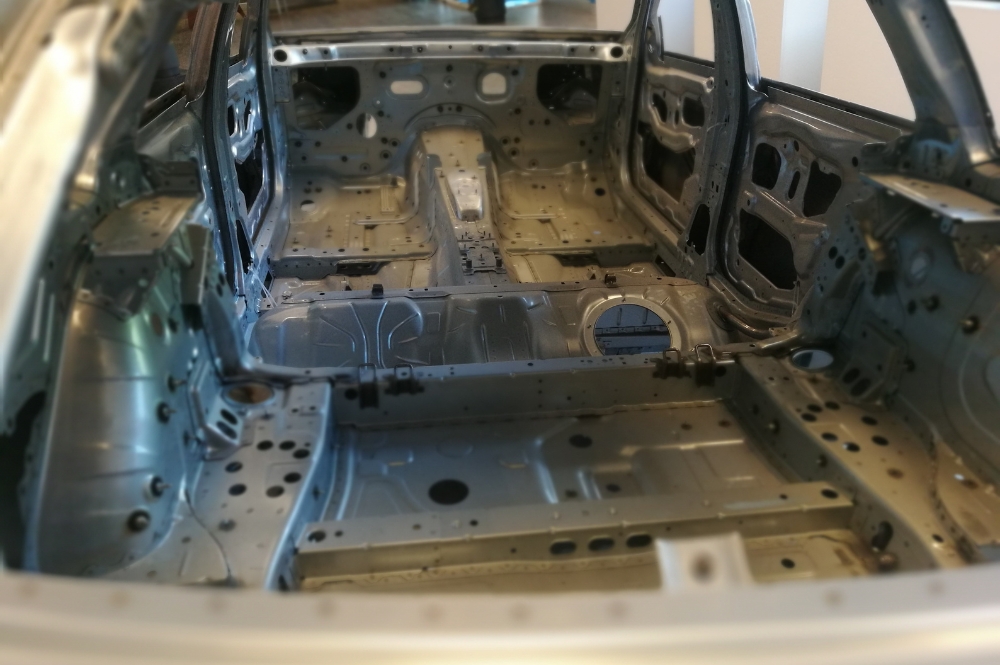
Auto Frame Repair for Orange County Drivers
OC Auto Body Shop provides auto frame repair from our Fullerton location for drivers throughout northern and central Orange County. We serve customers from Anaheim, Anaheim Hills, Brea, Buena Park, Cypress, Fullerton, Garden Grove, La Habra, Orange, Placentia, Santa Ana, Tustin, Westminster, and Yorba Linda.
Collisions on Orange County streets and the 5, 57, and 91 freeways can produce front, rear, side, and angled impacts that extend beyond visible exterior damage. Our team can coordinate structural evaluation with body repair, bumper service, auto painting, wheel repair, glass replacement, and related collision work.
Why Choose OC Auto Body Shop?
Auto frame repair requires more than making the exterior panels appear straight. Structural measurement, material identification, repair planning, controlled correction, part replacement, corrosion protection, and final verification all contribute to the completed repair.
OC Auto Body Shop provides structural and related collision services at one Fullerton facility. We work with major insurance companies, document concealed damage, and coordinate frame repair with bodywork, refinishing, wheel service, and electronic-system requirements.
Warranty coverage applies according to the repair terms. Our team explains the damage findings, proposed repairs, insurance updates, and expected schedule throughout the process.
Request an Auto Frame Repair Inspection in Fullerton
If your vehicle has been involved in an accident or shows signs of possible structural damage, contact OC Auto Body Shop for an inspection. We can evaluate the affected areas, measure the vehicle when appropriate, and determine whether straightening, structural replacement, or additional collision repair is required.
Call 714-714-4040 or visit 500 S. Raymond Avenue, Unit G, Fullerton, CA 92831. You can also contact OC Auto Body Shop online to request an auto frame repair inspection in Fullerton and Orange County.
FAQs
1. What is auto frame repair?
Auto frame repair addresses collision-related damage to a vehicle’s structural foundation. It may involve measurement, controlled straightening, structural component replacement, joining procedures, corrosion protection, and final verification.
2. Is auto frame repair the same as unibody repair?
Auto frame repair is often used as a general term for both full-frame and unibody structural work. Full-frame vehicles have a separate supporting frame, while unibody vehicles use an integrated body structure.
3. Can a small accident bend a vehicle frame?
Yes, certain lower-speed or angled impacts can affect structural ends, mounting points, bumper supports, or suspension locations. Inspection and measurement are needed to confirm whether the structure moved.
4. Can every damaged car frame be repaired?
No. Repairability depends on the vehicle’s material, damage location, deformation, manufacturer procedures, previous repairs, and available replacement methods. Some components must be replaced.
5. How can I tell whether my frame is bent?
Possible signs include uneven panel gaps, doors that do not close correctly, steering changes, unusual tire wear, wheel-position differences, or visible structural distortion. Measurements are required for confirmation.
6. How much does auto frame repair cost in Orange County?
Cost depends on the vehicle, structural damage, measurement requirements, labor, parts, joining methods, bodywork, painting, suspension repairs, and electronic-system service. Disassembly may be required before the full price is known.
7. How long does auto frame repair take?
The timeline depends on damage severity, parts availability, structural procedures, insurance approval, body repair, painting, scanning, and calibration. We can provide a reliable estimate after measuring and planning the repair.
8. Is wheel alignment included in frame repair?
Wheel alignment may be required after structural or suspension repair, but it is a separate process. Address structural and damaged suspension components before the final alignment.
9. Will insurance pay for auto frame repair?
Insurance may cover structural repairs resulting from a covered accident. Coverage depends on the policy, deductible, claim circumstances, repair estimate, and insurer’s approval.
10. Where is OC Auto Body Shop located?
OC Auto Body Shop is located at 500 S. Raymond Avenue, Unit G, Fullerton, CA 92831. The shop provides auto frame repair, collision repair, bumper service, auto painting, dent repair, wheel repair, and related services for Orange County drivers.