
A cracked windshield, shattered side window, or damaged rear glass can reduce visibility, expose the interior to weather, and interfere with features connected to the glass. OC Auto Body Shop provides professional auto glass replacement in Orange County for cars, trucks, and SUVs from our Fullerton location.
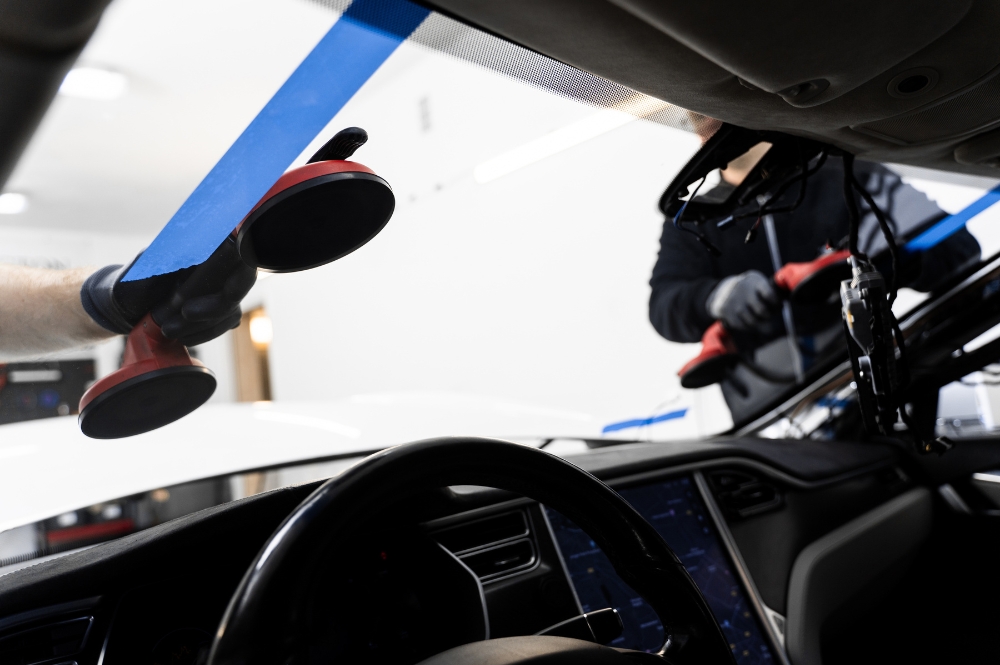
Modern automotive glass may include cameras, antennas, heating elements, acoustic layers, rain sensors, head-up display areas, tinting, moldings, and vehicle-specific mounting features. Our team evaluates the damaged glass and surrounding body area to identify the correct replacement requirements and any related collision repairs, diagnostic scans, or calibrations.
What Does Auto Glass Replacement Include?
Auto glass replacement is the process of removing damaged automotive glass, preparing the surrounding opening, installing the correct replacement, and verifying the fit and related features.
Depending on the vehicle and damaged area, the service may include:
- Windshield replacement
- Front or rear side-window replacement
- Rear-window replacement
- Quarter-glass replacement
- Vent-glass replacement
- Removal of broken glass
- Cleaning and preparation of the glass opening
- Replacement of damaged moldings or clips
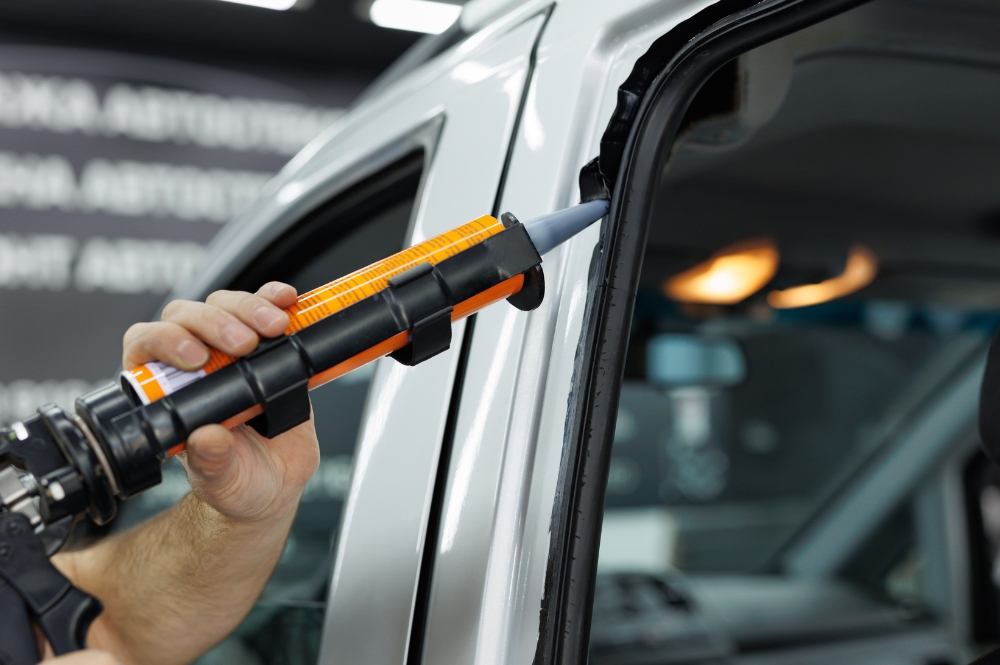
- Urethane adhesive application
- Transfer or replacement of attached components
- Leak and fit inspection
- Diagnostic scanning
- Camera or sensor calibration
The exact process varies because stationary glass and movable door glass are installed differently. Windshields and many rear windows are bonded to the body, while door windows operate through tracks, regulators, guides, and seals.
Why Is Professional Auto Glass Replacement Important?
Vehicle glass provides visibility, weather protection, and separation between the cabin and outside environment. Bonded glass may also interact with the body structure and other occupant-protection systems, depending on the vehicle’s design.
An incorrect glass type, improper preparation, incomplete adhesive bond, damaged molding, or disturbed camera can create additional concerns. Possible problems include:
- Wind noise
- Water leaks
- Loose moldings
- Visual distortion
- Incorrect glass fit
- Inoperative heating elements
- Camera or sensor problems
- Scratched paint around the opening
- Corrosion where coatings were damaged
- Door-window alignment problems
Professional replacement considers the glass, attachment method, surrounding body opening, electronic equipment, and required curing time rather than treating the job as a simple pane exchange.
When Should Auto Glass Be Replaced?
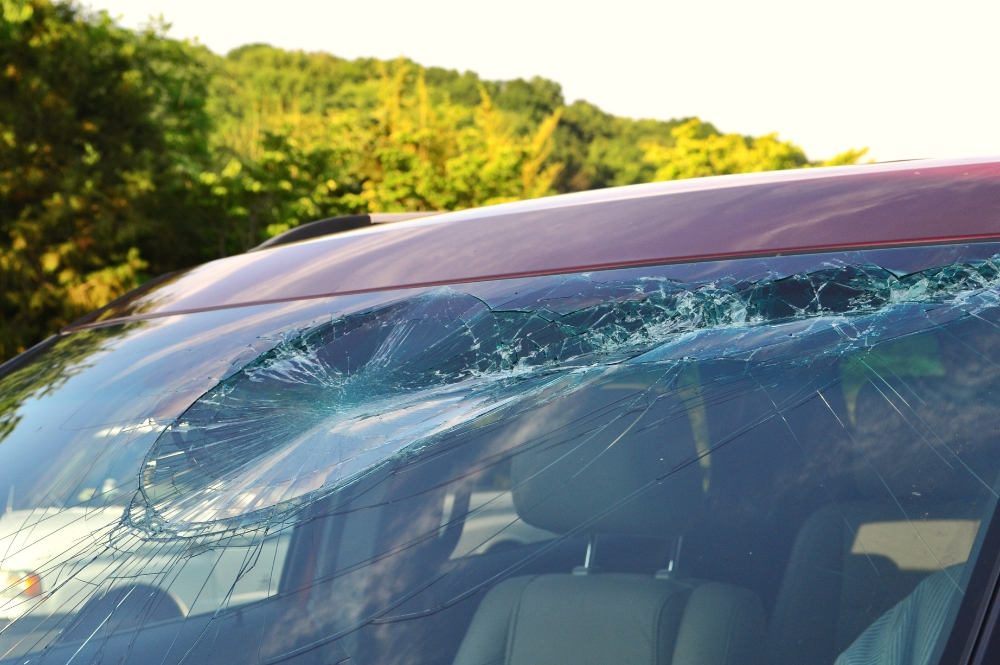
Replacement may be necessary when the damage cannot be repaired reliably or when the glass no longer provides suitable visibility, fit, or operation.
Common reasons for replacement include:
- A long or spreading windshield crack
- Multiple impact points
- Damage near the edge of the windshield
- A shattered side or rear window
- Serious damage through several glass layers
- Severe visual distortion
- Damage in the driver’s viewing area
- Cracks affecting a camera mounting area
- Broken defroster or antenna connections
- Glass damaged during a collision
- A side window that will not remain in its track
- Previous unsuccessful repair
The decision should be based on the damage’s type, size, depth, location, contamination, age, and relationship to vehicle features.
Can a Windshield Chip Be Repaired Instead?
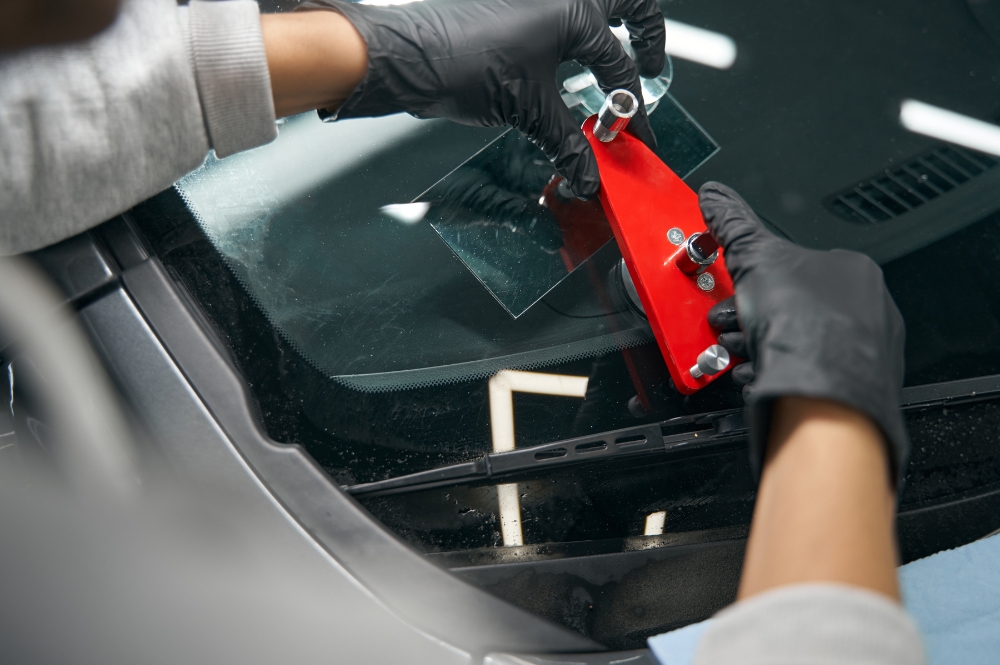
Some windshield chips and short cracks may qualify for repair when the damage is limited, clean, and positioned away from sensitive edges or critical equipment. Repair typically involves injecting a specialized resin into the damaged area.
A windshield repair may reduce the visibility of the chip and help prevent it from spreading, but it does not always make the mark disappear completely. Repairability depends on:
- Size and shape of the impact
- Depth of the damage
- Number of impact points
- Distance from the glass edge
- Location in the driver’s viewing area
- Contamination or moisture
- Previous repair attempts
- Proximity to cameras or sensors
- Vehicle-maker restrictions
An inspection is needed before deciding whether repair or replacement is the more appropriate option.
Windshield Replacement in Fullerton
Windshield replacement requires more than removing the old glass and installing a new piece. The windshield must match the vehicle’s year, make, model, body style, and installed equipment.
A windshield may include:
- Forward-facing camera brackets
- Rain or light sensor areas
- Heating elements
- Acoustic insulation
- Solar-control features
- Antenna connections
- Head-up display compatibility
- Special tint or shade bands
- Mirror mounting points
- Vehicle-specific moldings
Two windshields that appear similar may not support the same features. Identifying the correct configuration before installation helps avoid equipment incompatibility, optical problems, and unnecessary delays.
Side-Window Replacement
Side-window glass is generally tempered and designed to break into many small pieces rather than remain as one large sharp sheet. When shattered, it normally requires replacement rather than repair.
Side-window replacement may involve:
- Removing the interior door panel
- Extracting broken glass
- Inspecting the window regulator
- Checking tracks and guides
- Evaluating weatherstrips and seals
- Installing the replacement glass
- Adjusting glass alignment
- Testing window movement
- Reinstalling the door panel
A broken side window can also damage tint, trim, the regulator, wiring, switches, or door components. If the glass broke during a side impact, the door and surrounding body structure should receive a broader inspection.
Rear-Window Replacement
Rear automotive glass may contain defroster lines, antennas, tinting, camera-related features, or trim that must be considered during replacement. Most shattered rear windows cannot be repaired.
Broken glass can spread across the rear shelf, trunk, cargo area, seats, carpets, and interior trim. Careful cleanup is therefore part of the replacement process, although tiny fragments can sometimes remain in inaccessible spaces.
If the rear glass was damaged in a collision, the trunk opening, liftgate, roof edge, quarter panels, hinges, and surrounding body structure should also be checked for alignment.
Quarter-Glass and Vent-Glass Replacement
Quarter glass is the smaller stationary glass commonly located behind a rear door or near the rear side of a vehicle. Vent glass is a smaller section located near a front or rear side window on certain models.
Although these pieces are smaller than a windshield, replacement may require substantial trim removal. Some quarter-glass assemblies include moldings or trim that are attached to the glass and supplied as one unit.
Availability, installation method, and required disassembly depend on the vehicle.
What Is the Difference Between Laminated and Tempered Glass?
Automotive glass is commonly produced as laminated or tempered glass, although the type used in a particular location varies by vehicle.
Laminated Glass
Laminated glass contains an interlayer between pieces of glass. When damaged, the interlayer helps hold much of the broken glass together. Windshields are typically laminated, and some vehicles also use laminated side glass.
Certain chips in laminated windshields may qualify for repair, depending on their depth and location.
Tempered Glass
Tempered glass is heat-treated and designed to break into many smaller pieces. Side and rear windows commonly use tempered glass, though not every vehicle follows the same configuration.
Tempered glass generally cannot be repaired after it shatters. The complete pane must be replaced.
OEM and Aftermarket Auto Glass
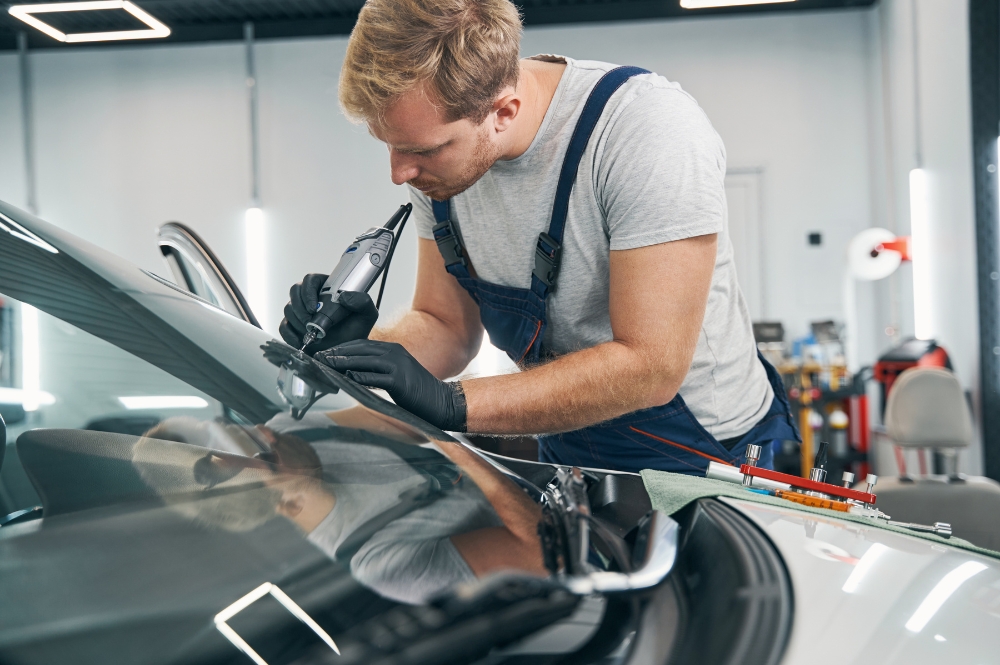
OEM and aftermarket glass may differ in branding, features, optical characteristics, attachments, and price. The correct choice depends on the vehicle, available options, insurance authorization, manufacturer requirements, and customer preferences.
The most important considerations include:
- Correct size and curvature
- Proper camera or sensor bracket
- Compatible head-up display area
- Required acoustic layer
- Appropriate tint and shade
- Heating or antenna connections
- Correct molding configuration
- Suitable optical quality
- Vehicle-maker requirements
OC Auto Body Shop identifies the vehicle and installed options before confirming the replacement. Customers should be informed about the proposed glass type and any insurance limitations before installation.
Windshield Cameras and ADAS Calibration
Many newer vehicles have a forward-facing camera mounted near the rearview mirror. The camera may support lane-departure warnings, lane-centering assistance, traffic-sign recognition, automatic emergency braking, adaptive cruise-control functions, or other driver-assistance features.
Removing and replacing the windshield may change the camera’s position in relation to the road. Depending on the vehicle, calibration may be required after the new windshield is installed.
Calibration requirements vary by year, make, model, equipment, and repair procedure. I-CAR’s guidance on windshield replacement recommends checking vehicle-specific OEM information to determine whether calibration, special tools, or diagnostic scanning are required.
Calibration can be static, dynamic, or a combination of both:
- Static calibration is performed with the vehicle positioned in relation to specified targets and measurements.
- Dynamic calibration may require driving the vehicle under defined road, speed, weather, and visibility conditions.
- Some vehicles require both procedures.
Replacing the glass without considering the installed camera can leave the repair process incomplete.
Rain Sensors, Mirrors, and Other Glass-Mounted Equipment
The windshield may support more than a camera. Components attached to or positioned against the glass can include:
- Rearview mirrors
- Rain sensors
- Light sensors
- Humidity sensors
- Camera housings
- Antennas
- Toll or communication devices
- Wiring covers
- Heated-wiper areas
- Head-up display systems
These components must be removed, transferred, replaced, or reconnected according to the vehicle and installation procedure. A rain sensor may require a new gel pad or attachment material, while another component may need testing after installation.
Auto Glass Replacement After a Collision
Broken glass caused by an accident should be evaluated as part of the complete collision damage. A bent door frame, distorted roof opening, damaged pillar, misaligned liftgate, or structural movement may accompany a shattered window.
Installing new glass into an opening that has not been repaired or aligned can lead to poor fit, stress, wind noise, or water leaks. The surrounding body must be evaluated before the replacement is finalized.
OC Auto Body Shop can coordinate auto glass replacement with collision repair, auto frame repair, panel replacement, and auto body painting.
Our Auto Glass Replacement Process
Damage and Vehicle Evaluation
We begin by identifying the damaged glass and checking the surrounding body area. We review the vehicle identification, body style, installed features, camera systems, sensors, tint, heating elements, and other options.
This helps determine which glass configuration and additional procedures are required.
Glass and Feature Identification
The replacement must correspond with the vehicle and its equipment. Camera brackets, antenna connections, acoustic layers, head-up display compatibility, heating features, and moldings are confirmed when applicable.
Incorrect feature identification can result in a glass part that fits the opening but does not support the vehicle’s equipment.
Insurance Coordination
When the replacement is connected to an insurance claim, OC Auto Body Shop can provide documentation and communicate repair information to major insurance companies.
The insurer determines coverage, glass type authorization, deductible, and other policy-related decisions. Customers should confirm their comprehensive or collision coverage directly with the insurance provider.
Protection and Removal
The vehicle’s paint, dashboard, interior, and surrounding trim are protected before damaged glass is removed. Moldings, wipers, cowl panels, interior trim, or attached equipment may also need to be removed.
For stationary glass, the existing adhesive is cut using methods appropriate for the vehicle and glass opening.
Opening Inspection and Preparation
After the damaged glass is removed, the opening is inspected for corrosion, damaged paint, distorted metal, old adhesive, broken clips, and other problems.
The bonding area is prepared according to the adhesive system and vehicle requirements. Damage to the opening should be addressed before the new glass is installed.
Glass Installation
The replacement glass is cleaned and prepared using the required primers and adhesive products. It is then positioned in the opening with attention to alignment, spacing, moldings, and attachments.
The urethane bead must create a continuous bond around the required area. Product compatibility and application conditions are important parts of this process.
Component Transfer and Reassembly
Mirrors, cameras, sensors, covers, moldings, wipers, trim, door panels, and other removed components are reinstalled or replaced as needed.
Electrical connections and included glass features are checked during reassembly.
Curing and Safe Drive-Away Time
A newly installed windshield must remain stationary until the adhesive reaches the specified minimum safe drive-away condition. The waiting period is not identical for every installation.
Adhesive type, temperature, humidity, vehicle requirements, and airbag configuration can affect the required time. I-CAR notes that the applicable adhesive data and vehicle-maker recommendations should determine when the vehicle can be released.
OC Auto Body Shop will provide the required waiting instructions for the specific installation. Customers should not assume that every vehicle can be driven after one standard waiting period.
Scanning and Calibration
When required, the vehicle receives diagnostic scanning, camera calibration, sensor service, or other procedures associated with the glass replacement.
Calibration results and warning indicators are reviewed before the vehicle is returned.
Final Inspection
The completed installation is checked for glass position, molding fit, visible adhesive concerns, component operation, warning lights, and obvious signs of leakage or wind-noise risk.
The customer also receives aftercare instructions related to the adhesive, tape, washing, driving, and installed equipment.
How Long Does Auto Glass Replacement Take?
The service time depends on the glass location, vehicle design, part availability, adhesive requirements, trim removal, attached equipment, and calibration needs.
A replacement involving a basic side window may follow a different timeline than a windshield with a camera, rain sensor, head-up display, and static calibration.
Factors that can affect completion include:
- Correct glass availability
- Broken-glass cleanup
- Moldings and clips
- Damage to the glass opening
- Corrosion repair
- Adhesive curing requirements
- Camera calibration
- Diagnostic scanning
- Insurance authorization
- Related collision repairs
A project-specific timeframe can be provided after the correct glass and required procedures are confirmed.
When Can You Drive After Windshield Replacement?
Do not drive until the shop confirms that the adhesive has reached the required safe drive-away condition. The minimum waiting period depends on the urethane product, temperature, humidity, vehicle design, and manufacturer instructions.
Driving too early, slamming doors, or creating excessive body movement may disturb an adhesive bond that has not cured sufficiently. Follow all instructions provided at delivery, including any recommendations about rough roads, car washes, tape removal, or window position.
Side-window replacements that do not use structural urethane may follow different instructions, but related door repairs or adhesives can still affect the timeline.
Will Insurance Cover Auto Glass Replacement?
Auto glass coverage depends on the policy and cause of damage. Comprehensive coverage may apply to damage from road debris, vandalism, falling objects, theft, or weather, while collision coverage may apply when glass is damaged in an accident.
Coverage may include a deductible. Camera calibration, moldings, sensors, tint, and related body repairs may be evaluated separately by the insurer.
OC Auto Body Shop works with major insurance companies and can provide damage and repair documentation. The vehicle owner should confirm deductibles, authorized glass options, calibration coverage, and claim requirements directly with the insurer.
How Should You Care for Newly Installed Auto Glass?
Follow the instructions provided for your vehicle and adhesive system. Aftercare may include:
- Waiting until the approved drive-away time
- Leaving retention tape in place as directed
- Avoiding automatic car washes temporarily
- Avoiding unnecessary door slamming
- Keeping the dashboard clear
- Monitoring for wind noise or water leaks
- Avoiding harsh cleaners on sensors or tint
- Reporting warning lights promptly
- Following calibration-related instructions
Do not remove tape early simply because the glass appears secure. Adhesive curing continues after installation, and care requirements can vary.
Auto Glass Replacement for Orange County Drivers
OC Auto Body Shop provides auto glass replacement from our Fullerton facility for drivers throughout northern and central Orange County. We serve customers from Anaheim, Anaheim Hills, Brea, Buena Park, Cypress, Fullerton, Garden Grove, La Habra, Orange, Placentia, Santa Ana, Tustin, Westminster, and Yorba Linda.
Orange County drivers regularly encounter freeway debris, construction zones, crowded parking areas, temperature changes, theft-related damage, and collisions that can crack or shatter automotive glass. Our team can evaluate the glass and determine whether related body, frame, door, roof, or electronic-system work is necessary.
Why Choose OC Auto Body Shop?
Auto glass replacement may involve more than the glass itself. Correct part identification, body-opening inspection, adhesive selection, trim removal, electronic-component transfer, diagnostic scanning, calibration, and curing requirements may all be part of the service.
OC Auto Body Shop provides glass replacement and related collision services at one Fullerton facility. If the damaged glass is connected to a bent door, roof damage, distorted frame, damaged paint, or another collision concern, our team can coordinate the necessary repairs.
We work with major insurance companies and explain the proposed glass, related procedures, expected timeline, and applicable repair terms before delivery.
Request an Auto Glass Replacement Estimate in Fullerton
If your vehicle has a cracked windshield, shattered side window, damaged rear glass, or broken quarter glass, contact OC Auto Body Shop for an inspection. We can identify the correct replacement requirements and determine whether calibration or related body repair is necessary.
Call 714-714-4040 or visit 500 S. Raymond Avenue, Unit G, Fullerton, CA 92831. You can also contact OC Auto Body Shop online to request an auto glass replacement estimate in Fullerton and Orange County.
FAQs
1. Can a cracked windshield be repaired instead of replaced?
Some limited chips and short cracks may qualify for repair. Eligibility depends on the size, depth, location, contamination, edge proximity, camera area, and vehicle-maker requirements.
2. How do I know which windshield my vehicle needs?
The correct windshield is identified using the vehicle’s year, make, model, body style, identification information, and installed features such as cameras, sensors, heating, acoustic glass, or a head-up display.
3. Does windshield replacement require camera calibration?
Calibration may be required when the vehicle has a camera mounted to or viewing through the windshield. The requirement depends on the specific year, make, model, equipment, and manufacturer procedure.
4. How long does auto glass replacement take?
The timeline depends on glass availability, installation type, adhesive curing, moldings, broken-glass cleanup, attached equipment, scanning, and calibration. A project-specific estimate is provided after these requirements are confirmed.
5. Can I drive immediately after windshield replacement?
Not necessarily. You must wait until the adhesive reaches the specified safe drive-away condition. The required time depends on the product, weather conditions, vehicle design, and manufacturer instructions.
6. Will insurance pay for auto glass replacement?
Insurance may cover glass damaged by a covered collision, road debris, vandalism, falling object, theft, or weather event. Coverage and deductibles depend on the policy and insurer’s decision.
7. What is the difference between OEM and aftermarket glass?
OEM and aftermarket glass may differ in branding, available features, optical characteristics, attachments, and price. The replacement must support the vehicle’s required equipment and installation specifications.
8. Can a shattered side window be repaired?
No. Shattered tempered side glass generally requires complete replacement. The door tracks, regulator, seals, trim, and surrounding collision damage should also be inspected.
9. Why is my windshield camera important?
The camera may support lane, braking, traffic-sign, or other driver-assistance features. Its position can change during windshield replacement, which is why vehicle-specific calibration requirements must be checked.
10. Where is OC Auto Body Shop located?
OC Auto Body Shop is located at 500 S. Raymond Avenue, Unit G, Fullerton, CA 92831. The shop provides auto glass replacement, collision repair, frame repair, bumper service, auto painting, dent repair, and related services for Orange County drivers.