
Scraped curbs, potholes, road debris, parking incidents, and collisions can leave wheels scratched, gouged, bent, cracked, or visibly damaged. Some wheel problems are limited to the surface and may qualify for cosmetic refinishing. Structural damage requires a more cautious evaluation because some vehicle manufacturers prohibit straightening, welding, heating, or altering a damaged wheel. OC Auto Body Shop provides professional wheel repair evaluations and cosmetic wheel refinishing in Orange County from our Fullerton location.
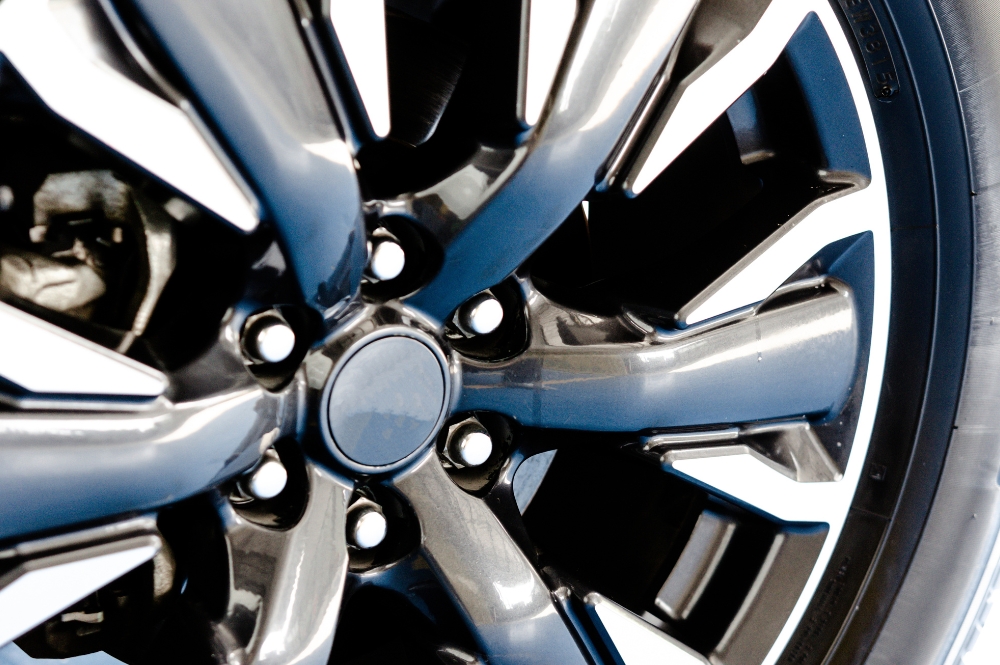
Our team inspects the wheel, tire, finish, and surrounding collision area before recommending repair or replacement. The correct decision depends on the type of wheel, damage location, manufacturer restrictions, previous repairs, and whether the problem is cosmetic or potentially structural.
What Is Automotive Wheel Repair?
Wheel repair includes the inspection and correction of qualifying cosmetic or physical damage. The available service depends on the wheel’s material, construction, finish, and condition.
Wheel services may include:
- Curb-rash repair
- Scratch and scuff correction
- Surface preparation
- Painted-wheel refinishing
- Clear-coat refinishing
- Color restoration
- Cosmetic gouge correction
- Replacement recommendations
- Collision-damage evaluation
- Tire and suspension inspection coordination
A cosmetic repair changes the wheel’s surface appearance without altering its structure. Structural repair may involve straightening, welding, heating, machining, or material removal. These methods are not permitted for every wheel or vehicle, so manufacturer requirements must be checked before structural work is considered.
What Is the Difference Between a Wheel and a Rim?
The terms “wheel” and “rim” are often used interchangeably, but they do not mean the same thing.
The wheel is the complete metal component mounted to the vehicle’s hub. It includes the center section, spokes, mounting surface, lug holes, barrel, and outer edges.
The rim technically refers to the outer portion of the wheel where the tire is seated. When drivers search for “rim repair,” they are usually referring to repair or refinishing of the complete wheel.
OC Auto Body Shop evaluates the entire wheel rather than focusing only on the visible outer edge.
What Types of Wheel Damage Can Occur?
Wheel damage ranges from light cosmetic marks to serious cracks and deformation. Correctly identifying the category helps determine whether refinishing, additional inspection, or replacement is appropriate.
Curb Rash
Curb rash is surface damage along the outer wheel edge caused by contact with a curb, parking barrier, or similar object. It may include scratches, scuffs, chipped paint, and shallow gouges.
Limited curb rash may qualify for cosmetic repair when the damage does not affect the wheel’s structure or tire-sealing surface.
Scratches and Scuffs
Wheel scratches can result from car-wash equipment, road debris, improper tools, tire installation, or minor contact. The repair method depends on the scratch’s depth and the wheel finish.
Light surface marks may require sanding and refinishing, while deep gouges need closer inspection.
Peeling Paint or Clear Coat
Sunlight, road contamination, cleaning chemicals, brake dust, previous refinishing, and normal wear can contribute to finish deterioration. A wheel with peeling paint or clear coat may be refinished if its structure remains undamaged.
Corrosion or material deterioration beneath the finish must be evaluated before refinishing begins.
Bent Wheels
A pothole, curb impact, road hazard, or collision can deform the wheel barrel or edge. A bent wheel may contribute to vibration, air loss, poor tire seating, or balance problems.
A bent wheel should not automatically be straightened. Manufacturer restrictions, material, damage severity, and location must be reviewed. Replacement may be required.
Cracked Wheels
Cracks can develop after a severe impact, repeated stress, improper previous repair, or advanced damage. A cracked wheel may lose air or fail to support the tire correctly.
Some manufacturers prohibit welding or repairing cracked wheels. When the repair is not specifically permitted, replacement is the appropriate recommendation.
Collision-Damaged Wheels
A collision can damage the wheel, tire, hub, bearing, steering, suspension, or structural mounting points. Even when the wheel has only a visible scrape, the force of the impact may have affected nearby components.
Collision-related wheel damage should receive a broader inspection than ordinary curb rash.
Can a Bent Wheel Be Repaired?
A bent wheel may be repairable in limited situations, but repair cannot be assumed. The decision depends on the manufacturer’s position, wheel material, bend location, amount of deformation, and whether the wheel has cracks or previous repairs.
Important factors include:
- Steel or aluminum construction
- Cast, forged, or other manufacturing method
- Location of the bend
- Depth and sharpness of the deformation
- Condition of the bead-seat area
- Presence of cracks
- Previous straightening or welding
- Manufacturer repair restrictions
- Heat required to complete the correction
- Availability of a suitable replacement
Some manufacturers prohibit straightening, heating, welding, or modifying a structurally damaged wheel. When these restrictions apply, the wheel should be replaced rather than repaired.
Can a Cracked Wheel Be Welded?
A cracked wheel should not automatically be welded. Welding changes the material around the repair and may not be permitted by the vehicle or wheel manufacturer.
The crack’s location is also important. Damage near spokes, lug holes, the hub-mounting area, or another highly stressed section raises serious concerns. Multiple cracks, prior welds, severe impact damage, or missing material may make replacement the appropriate decision.
Current manufacturer rules vary. For example, FCA’s wheel position statement permits limited cosmetic refinishing but does not recommend straightening, welding, heating, or otherwise repairing structurally damaged wheels.
OC Auto Body Shop evaluates the wheel and applicable restrictions before recommending a service. We do not treat every cracked wheel as a repair candidate.
When Should a Wheel Be Replaced?
Replacement is generally recommended when the wheel has structural damage that cannot be repaired under the applicable manufacturer guidance or when continued use would be questionable.
A wheel may need replacement when:
- It is cracked
- A spoke is damaged
- The hub or lug-hole area is distorted
- The mounting surface is damaged
- A severe bend affects tire seating
- Material is missing
- Previous welding or straightening is visible
- Multiple areas are deformed
- The manufacturer prohibits repair
- The wheel cannot be balanced or sealed properly
- Corrosion has significantly affected the material
A replacement wheel must have the correct diameter, width, offset, bolt pattern, center bore, load rating, brake clearance, and compatibility with the tire and vehicle.
What Is Cosmetic Wheel Refinishing?
Cosmetic refinishing restores qualifying surface damage without changing the wheel’s structure. It may be appropriate for curb rash, scratches, paint chips, scuffs, fading, or peeling clear coat.
The process may include:
- Cleaning and degreasing
- Finish inspection
- Sanding damaged areas
- Smoothing qualifying cosmetic gouges
- Masking or tire removal as needed
- Primer application
- Color application
- Clear-coat application
- Curing and final inspection
The selected method must be appropriate for the wheel and finish. Excessive material removal or uncontrolled heat should not be used to conceal structural damage.
Painted and Machined Wheel Finishes
Automotive wheels are available in several finishes, and each has different refinishing requirements.
Painted Wheels
Painted wheels use color and clear coat to create the finished appearance. A qualifying painted wheel may be prepared, color matched, refinished, and clear-coated.
Age differences, fading, texture, metallic content, and previous repairs can make an exact cosmetic match difficult.
Machined-Face Wheels
Machined-face wheels have visible lines created by machining the metal surface before clear coat is applied. Reproducing this finish may require specialized equipment and sufficient remaining material.
Repeated machining can remove additional metal, so the wheel’s condition and prior refinishing history should be considered.
Polished Wheels
Polished wheels create shine through surface finishing rather than a conventional painted appearance. Scratches, oxidation, and staining may require a different correction process.
Chrome-Like and Specialty Finishes
Chrome-plated or specialty-finish wheels can have strict repair limitations. Peeling, corrosion, or damage may not be suitable for a simple painted repair. Certain manufacturers can also prohibit replating.
The shop should identify the finish before recommending a repair.
Can Curb Rash Affect More Than Appearance?
Light curb rash is often cosmetic, but stronger curb contact can affect the wheel edge, tire sidewall, bead area, alignment, or suspension. The appearance of the scratch alone does not show how much force was involved.
A wheel should receive additional inspection when curb contact is followed by:
- Tire-pressure loss
- A visible tire bubble or cut
- Steering-wheel vibration
- Pulling to one side
- New road noise
- An off-center steering wheel
- A TPMS warning
- Visible wheel deformation
- Changes in handling
Do not continue driving on a tire with exposed cords, severe sidewall damage, or rapid air loss.
Why Is a Wheel Inspection Important After a Pothole Impact?
A pothole impact can damage several components during one event. The wheel may bend or crack, while the tire, suspension, steering, bearing, alignment, or underbody may also be affected.
The inspection should consider:
- Inner and outer wheel surfaces
- Tire tread and sidewalls
- Tire bead and air pressure
- Wheel runout
- Balance concerns
- Suspension components
- Steering parts
- Wheel bearing symptoms
- Alignment changes
- Nearby underbody damage
The inner wheel barrel may have damage that is not visible while the wheel remains installed on the vehicle.
Wheel Vibration and Balance Problems
Wheel vibration does not always mean the wheel itself is bent. Possible causes include tire imbalance, damaged tires, uneven tread wear, suspension problems, alignment issues, wheel runout, debris inside the wheel, or incorrect mounting.
The speed at which vibration occurs can provide useful information, but it does not confirm the cause. A complete evaluation may require tire inspection, balance testing, runout measurement, and examination of steering or suspension components.
Cosmetic refinishing will not correct a mechanical vibration unrelated to the wheel’s surface.
Wheel Damage After a Collision
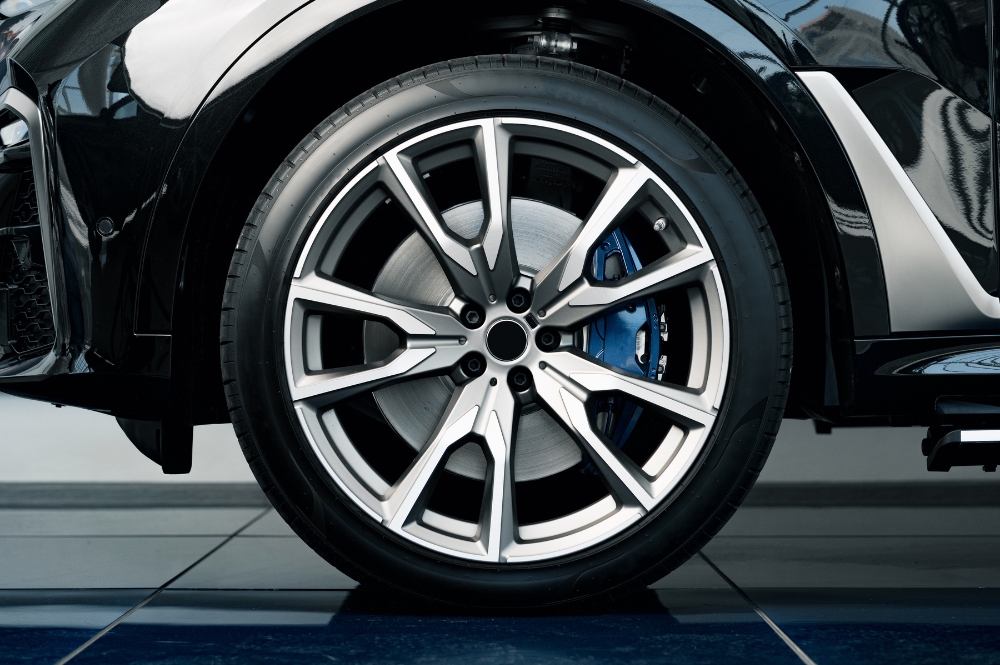
Wheel damage caused by an accident should be evaluated as part of the complete collision repair. The impact may have affected:
- Tires
- Wheel bearings
- Hubs
- Control arms
- Tie rods
- Struts or shocks
- Steering components
- Suspension mounting points
- Axles
- Frame or unibody areas
- Alignment
- Electronic driver-assistance systems
OC Auto Body Shop can coordinate wheel evaluation with collision repair and auto frame repair when the impact extends beyond the wheel.
Our Wheel Repair Process
Vehicle and Damage Inspection
We begin by asking how the damage occurred and whether the driver noticed vibration, air loss, pulling, warning lights, or changes in handling.
The visible face, outer edge, tire, and surrounding vehicle area are inspected. Additional examination may be required to evaluate the inner barrel and mounting surface.
Wheel and Finish Identification
The wheel material, size, construction, finish, and vehicle application are identified. Painted, polished, machined, chrome-like, and specialty finishes require different repair approaches.
We also check for signs of previous straightening, welding, refinishing, or material removal.
Repairability Review
Cosmetic and structural damage are separated. Manufacturer restrictions and the damage location are considered before the wheel is approved for any physical correction.
When structural repair is prohibited or inappropriate, replacement is recommended.
Tire Removal When Required
Some wheel inspections and refinishing procedures require the tire, valve stem, pressure sensor, balance weights, or center cap to be removed. This work may be performed or coordinated according to the selected repair.
Tire condition should also be checked when a curb, pothole, or collision damaged the wheel.
Surface Preparation
For qualifying cosmetic damage, the wheel is cleaned, and the affected finish is prepared. Scratches, scuffs, and curb rash are addressed without unnecessarily altering the wheel.
Loose paint, contamination, and deteriorated clear coat are removed from the refinishing area as needed.
Color and Finish Application
Primer, color, and clear coat may be applied based on the original finish and selected repair. Metallic appearance, gloss level, texture, and age can affect how closely the repaired wheel matches the remaining wheels.
A color variation may remain when the original wheels have faded or use a complex specialty finish.
Curing and Inspection
The refinished wheel is allowed to cure using a method suitable for the products and wheel requirements. Excessive heat should not be used when prohibited.
The finish is checked for coverage, texture, gloss, and visible defects.
Reinstallation and Related Service
When the tire has been removed, mounting, balancing, valve components, and tire-pressure sensors may require attention before the wheel returns to service.
The wheel must be installed using the correct mounting procedure and fastener specifications. Alignment or suspension service may also be recommended after a significant impact.
Can Wheel Repair Fix Tire-Pressure Loss?
Wheel-related air loss may occur when the bead-seat area is damaged, corroded, contaminated, or deformed. Air loss can also result from a punctured tire, a damaged valve stem, a faulty tire-pressure sensor seal, or a cracked wheel.
The source should be identified before repair. Cosmetic refinishing alone will not correct air loss caused by a structural crack, tire puncture, or valve problem.
A wheel that continues losing air should be inspected promptly rather than repeatedly refilled.
Does Wheel Repair Include Wheel Alignment?
Wheel repair and wheel alignment are separate services. Wheel repair addresses damage or finish problems affecting the wheel. Alignment adjusts suspension angles that influence tire contact, steering position, and vehicle tracking.
An alignment may be recommended after:
- A strong pothole impact
- Curb contact
- Collision damage
- Suspension repair
- Structural repair
- Noticeable pulling
- An off-center steering wheel
- Unusual tire wear
If the vehicle has structural or suspension damage, those problems should be addressed before the final alignment.
Will Insurance Cover Wheel Repair or Replacement?
Insurance may cover wheel damage caused by a covered collision, pothole event, vandalism, theft, or other insured loss. Coverage depends on the policy, deductible, accident details, and insurer’s decision.
The insurance company may evaluate whether the wheel should be cosmetically refinished, structurally repaired, or replaced. Vehicle-manufacturer restrictions and the location of the damage can affect the recommendation.
OC Auto Body Shop works with major insurance companies and can provide damage documentation. Customers should confirm coverage, deductibles, and replacement-part authorization directly with their insurers.
How Long Does Wheel Repair Take?
The timeline depends on the number of wheels, damage type, finish, required disassembly, curing process, tire service, and whether replacement parts are needed.
A limited curb-rash repair may require less time than refinishing several wheels or coordinating collision-related tire, suspension, and alignment work.
The timeframe may be affected by:
- Wheel material
- Finish complexity
- Color matching
- Previous repairs
- Tire removal
- Curing requirements
- Replacement-wheel availability
- Insurance authorization
- Related collision damage
An inspection allows OC Auto Body Shop to provide a more accurate estimate and schedule.
How Should Refinished Wheels Be Maintained?
Allow the refinished surface to cure according to the instructions provided. Avoid aggressive cleaning, abrasive brushes, harsh chemicals, and strong acidic wheel cleaners.
Brake dust and road contamination should be removed regularly using products appropriate for the finish. Use soft washing materials and avoid cleaning a hot wheel immediately after driving.
If a tire shop services the wheel later, tell the technician that it has been refinished so reasonable care can be taken around mounting points, balance weights, and visible surfaces.
Wheel Repair for Orange County Drivers
OC Auto Body Shop provides wheel repair evaluations and cosmetic wheel refinishing from our Fullerton facility for drivers throughout northern and central Orange County. We serve customers from Anaheim, Anaheim Hills, Brea, Buena Park, Cypress, Fullerton, Garden Grove, La Habra, Orange, Placentia, Santa Ana, Tustin, Westminster, and Yorba Linda.
Orange County drivers regularly encounter potholes, construction areas, parking curbs, freeway debris, and collisions that can affect wheels and tires. Our team can determine whether the issue is cosmetic, whether additional mechanical inspection is needed, or whether manufacturer guidance requires wheel replacement.
Why Choose OC Auto Body Shop?
Wheel damage may be cosmetic, mechanical, or related to a larger collision. OC Auto Body Shop evaluates the complete situation instead of assuming every bent or cracked wheel should be repaired.
We provide wheel refinishing and related auto body services from one Fullerton location. If the wheel damage is connected to a damaged bumper, body panel, suspension area, or vehicle structure, our team can coordinate the necessary inspection and collision repair.
We work with major insurance companies and explain whether cosmetic refinishing, further testing, or replacement is recommended.
Request a Wheel Repair Inspection in Fullerton
If your vehicle has curb rash, scratched wheels, peeling clear coat, impact damage, vibration, or possible wheel deformation, contact OC Auto Body Shop for an inspection. We can evaluate whether cosmetic refinishing is appropriate or whether the wheel requires replacement or related mechanical attention.
Call 714-714-4040 or visit 500 S. Raymond Avenue, Unit G, Fullerton, CA 92831. You can also contact OC Auto Body Shop online to request a wheel repair estimate in Fullerton and Orange County.
FAQs
1. Can curb rash be repaired?
Limited curb rash may qualify for cosmetic refinishing when the damage affects only the wheel’s surface. More serious damage near the tire bead or a structural area requires additional evaluation.
2. Can every bent wheel be straightened?
No. Repairability depends on the wheel material, damage location, severity, manufacturer restrictions, and previous repair history. Some bent wheels must be replaced.
3. Is it safe to weld a cracked alloy wheel?
Not automatically. Many manufacturers prohibit welding structurally damaged wheels. The vehicle and wheel requirements should be reviewed, and replacement is often recommended when a crack is present.
4. How do I know whether my wheel is damaged?
Possible signs include visible deformation, vibration, repeated air loss, a tire-pressure warning, an off-center steering wheel, unusual noise, or changes in handling. These symptoms can also have other causes.
5. How much does wheel repair cost in Orange County?
Cost depends on the number of wheels, damage type, material, finish, required tire service, and whether the issue is cosmetic or structural. An inspection is needed for an accurate estimate.
6. How long does wheel repair take?
The timeframe depends on the damage, finish, curing process, tire removal, and related collision work. Replacement-wheel availability and insurance approval can also affect the schedule.
7. Will a refinished wheel match the other wheels?
The existing color, gloss, texture, age, and finish are evaluated during refinishing. A close match may be possible, but fading and specialty finishes can create visible differences.
8. Will insurance cover a damaged wheel?
Insurance may cover wheel repair or replacement when the damage results from a covered collision, pothole event, vandalism, or theft. Coverage depends on the policy, deductible, and insurer’s decision.
9. Should the tire be inspected after wheel damage?
Yes. A curb, pothole, or collision can damage the tire sidewall, bead, tread, or internal structure. The suspension, steering, and alignment may also need inspection after a strong impact.
10. Where is OC Auto Body Shop located?
OC Auto Body Shop is located at 500 S. Raymond Avenue, Unit G, Fullerton, CA 92831. The shop provides wheel repair evaluations, cosmetic refinishing, collision repair, frame repair, auto painting, dent repair, and related services for Orange County drivers.