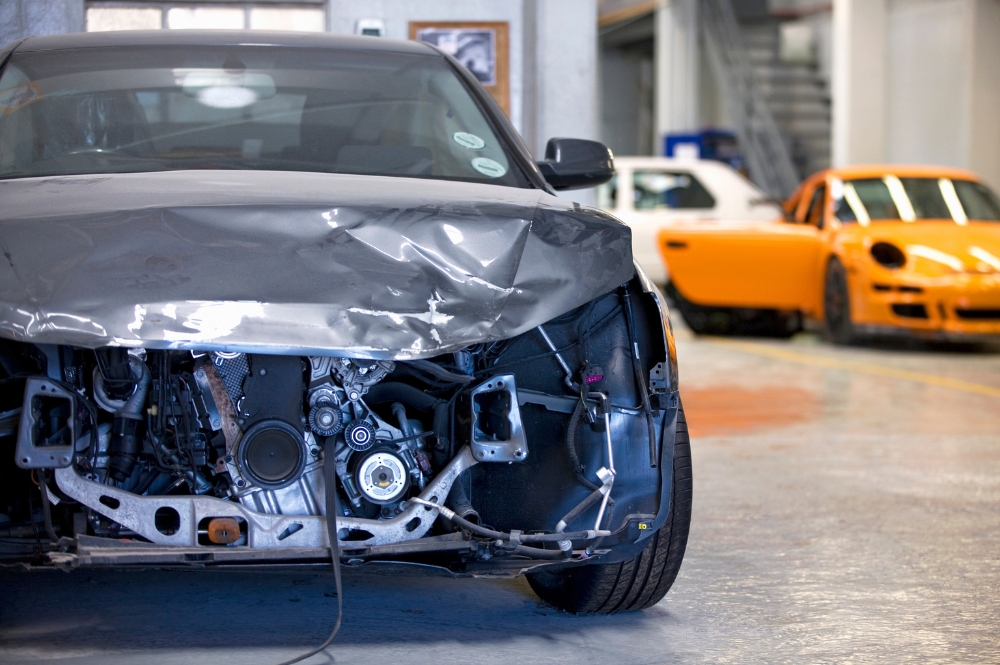
A collision can damage much more than the exterior panels you can see. Bumpers, brackets, structural areas, wheels, suspension components, safety systems, sensors, cameras, lights, glass, and electrical connections may also be affected. OC Auto Body Shop provides professional collision repair in Orange County from our Fullerton facility, helping drivers address both visible and concealed accident damage.
Every collision repair begins with a detailed evaluation. Our team examines the affected areas, documents the damage, identifies the necessary repairs, and develops a repair plan based on the vehicle’s condition. Whether your car has minor parking-lot damage or requires extensive body and structural work, we can coordinate the related repair, replacement, refinishing, and insurance-claim steps.
What Is Collision Repair?
Collision repair is the process of evaluating and restoring vehicle damage caused by an accident or impact. The work may involve cosmetic, mechanical, electronic, or structural components depending on where and how the vehicle was hit.
A complete collision repair may include:
- Vehicle damage inspection
- Diagnostic scanning
- Disassembly of affected areas
- Structural measurement and repair
- Frame or unibody correction
- Dent and panel repair
- Panel or part replacement
- Bumper repair or replacement
- Wheel and suspension evaluation
- Glass replacement
- Auto body painting and refinishing
- Sensor or camera service
- Reassembly and alignment
- Final testing and quality inspection
The scope cannot always be confirmed from photographs or a quick exterior review. Some damage becomes visible only after trim, bumpers, panels, or other components are removed.
Why Is Professional Collision Repair Important?
Professional collision repair addresses the complete affected area rather than focusing only on scratches and dents. A vehicle can appear drivable while still having damaged brackets, misaligned panels, broken retainers, bent structural areas, disturbed sensors, or wheel and suspension problems.
Proper inspection is particularly important after front, rear, and side impacts because several vehicle systems may occupy the same damaged area. A front bumper, for example, may contain grilles, lights, parking sensors, cameras, wiring, reinforcement components, and air-management parts.
Repairing only the visible surface can leave other problems undiscovered. A complete evaluation helps determine what must be repaired, replaced, tested, or calibrated before the vehicle is returned.
What Types of Collision Damage Do We Repair?
OC Auto Body Shop works on a range of accident-related exterior and body damage affecting cars, trucks, and SUVs. The appropriate service depends on the location and severity of the impact.
Common collision repairs include:
- Front-end collision damage
- Rear-end collision damage
- Side-impact body damage
- Fender and quarter-panel damage
- Door and rocker-panel damage
- Hood and trunk damage
- Bumper cracks, dents, and scrapes
- Broken exterior trim and mounting parts
- Paint scratches, chips, and scuffs
- Misaligned body panels
- Damaged wheels
- Broken automotive glass
- Structural and frame-related damage
Minor damage may require localized bodywork and refinishing. A stronger impact may involve disassembly, structural measurement, replacement parts, electronic testing, and several coordinated repair stages.
Front-End Collision Repair
Front-end accidents can affect the bumper, grille, hood, fenders, headlights, radiator supports, cooling components, wheels, suspension, and structural areas. Modern vehicles may also have cameras, parking sensors, or radar-related equipment installed near the front bumper or windshield.
A vehicle with front-end damage should be inspected for more than cosmetic concerns. Even when the hood closes and the car remains drivable, panel gaps, fluid leaks, warning lights, steering changes, or unusual noises may indicate additional damage.
Depending on the findings, front-end collision repair may involve bumper repair or replacement, panel replacement, dent repair, structural correction, paint refinishing, light replacement, or electronic-system service.
Rear-End Collision Repair
Rear-end impacts commonly damage the bumper cover, reinforcement components, trunk lid, liftgate, rear body panel, quarter panels, lights, exhaust components, sensors, cameras, and surrounding trim.
Visible bumper damage does not always show the full force of the impact. The cover may return close to its original shape while brackets, absorbers, retainers, or reinforcement parts behind it remain damaged.
Our team evaluates the bumper assembly, trunk or liftgate operation, exterior panel alignment, lights, sensors, and other affected areas. If damage extends beyond the bumper, the repair plan may include bodywork, part replacement, painting, structural inspection, or additional testing.
Side-Impact Collision Repair
Side impacts may affect doors, fenders, quarter panels, rocker panels, pillars, mirrors, windows, wheels, suspension, and structural areas. Damage can also interfere with door operation, window movement, weather sealing, locks, and electronic components.
A door that appears slightly dented may have internal damage or alignment problems. More serious impacts can affect the opening around the door, the floor area, or nearby structural sections.
Side-impact collision repair begins with careful inspection and measurement. The damaged panels are evaluated to determine whether they can be repaired or should be replaced. Related systems and components are also checked before the vehicle is reassembled.
Fender and Quarter-Panel Repair
Fenders and quarter panels are frequently damaged in lane-change accidents, parking incidents, side impacts, and front or rear collisions. The repair method depends on the panel material, dent location, paint condition, and extent of deformation.
A removable fender may sometimes be repaired or replaced separately. A quarter panel is generally more integrated into the vehicle’s body and can require a more involved repair process.
Small qualifying dents may be suitable for paintless dent repair when the paint remains intact, and the damage is accessible. Creases, torn metal, chipped paint, or heavily distorted panels usually require traditional body repair and refinishing.
Bumper Repair and Replacement
Bumper damage ranges from paint transfer and surface scratches to deep cracks, missing material, broken mounting tabs, and concealed damage behind the cover.
A repairable bumper may be reshaped, reinforced, filled, sanded, primed, and painted. Replacement may be recommended when the cover is extensively torn, permanently distorted, unable to attach correctly, or damaged around important sensor and mounting areas.
OC Auto Body Shop provides complete bumper repair and replacement as part of collision restoration. Related trim, brackets, grilles, lights, cameras, and sensors are also evaluated.
Dent and Panel Repair
Dents can vary considerably in shape and complexity. A shallow door ding with undamaged paint requires a different repair method than a sharp crease, stretched metal, damaged body line, or dent that has cracked the finish.
The repair decision depends on:
- Dent depth and diameter
- Panel material
- Paint condition
- Location near panel edges
- Accessibility behind the damage
- Metal stretching
- Previous bodywork
- Related collision damage
OC Auto Body Shop provides dent and scratch repair using methods selected for the specific damage. When necessary, the panel is repaired through traditional bodywork and prepared for painting.
Frame and Structural Repair
Many modern vehicles use a unibody structure in which multiple sections work together as thevehicle’ss foundation. Trucks and certain SUVs may use a separate frame. Either design can be affected by a collision.
Possible signs of structural or frame-related damage include uneven panel gaps, doors that do not close correctly, visible distortion, steering problems, unusual tire wear, or a vehicle that does not track normally. These signs can also have other causes, so professional measurement and inspection are necessary.
When structural damage is identified, frame repair may involve measuring affected areas, identifying the required correction, and completing repairs according to the vehicle and damage. Structural work should be coordinated with panel alignment, suspension evaluation, and final assembly.
Auto Painting After Collision Repair
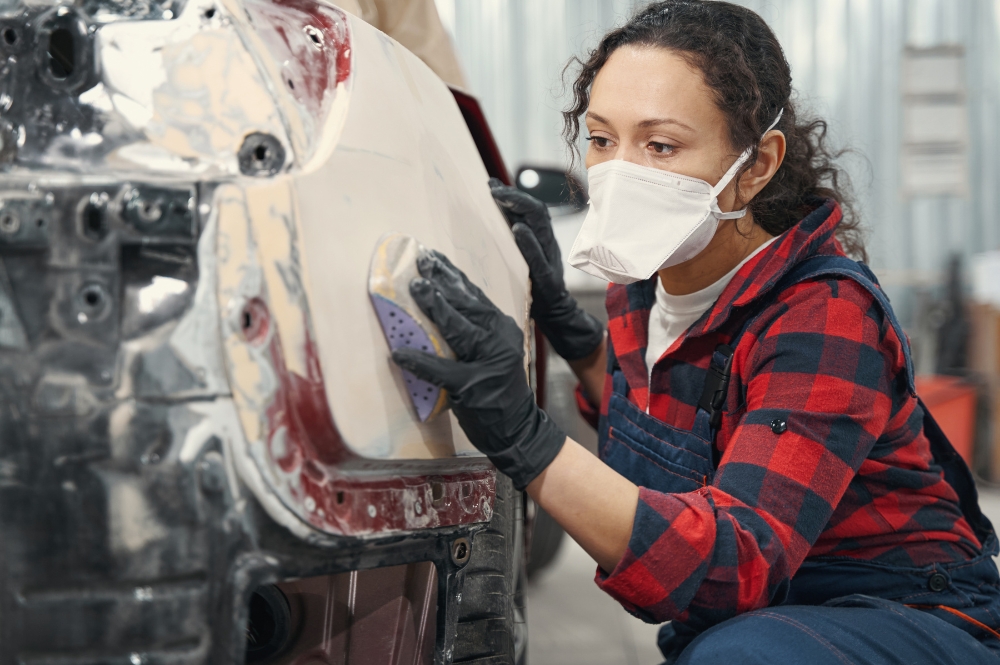
Body repair and replacement panels often require professional refinishing. The process may include cleaning, sanding, priming, color matching, base-coat application, clear-coat application, curing, and polishing.
The manufacturer’s paint code provides a starting formula, but sunlight, age, environmental exposure, previous repairs, and application variations can change how the existing finish appears. Metallic and pearl colors may require particular attention to application and blending.
Our auto body painting services are coordinated with the body repair so repaired and replaced panels receive appropriate preparation before refinishing.
Sensors, Cameras, and Driver-Assistance Systems
Modern vehicles may have driver-assistance components positioned in the bumper, grille, windshield, mirrors, quarter panels, or other collision-prone locations. Depending on the model, these can include parking sensors, cameras, blind-spot components, or radar-related equipment.
An impact or repair may alter the position of a sensor or its mounting bracket even when the component is not visibly broken. Diagnostic scanning, testing, aiming, or calibration may be required based on the vehicle manufacturer’s procedures and the repairs performed.
A warning light is not the only possible sign of a problem. Some systems can store diagnostic information without displaying an obvious dashboard message. Collision repair planning should therefore account for the vehicle’s installed equipment as well as the exterior damage.
Our Collision Repair Process
Initial Damage Evaluation
The process begins with an inspection of the visible damage. We document the affected areas, identify obvious repair needs, review the vehicle’s features, and discuss whether an insurance claim has been opened.
Photographs can help with an initial review, but they may not reveal damage behind panels or under the vehicle.
Estimate and Repair Planning
An initial estimate outlines the visible damage and expected repair operations. The plan may include labor, parts, refinishing materials, scans, calibration, glass, wheel work, or other required services.
The estimate can change if concealed damage is found after disassembly. When this happens during an insurance repair, additional documentation may be submitted to the insurance company for review.
Insurance Coordination
OC Auto Body Shop works with major insurance companies and can communicate repair information related to the claim. This may include estimates, photographs, damage documentation, supplemental repair needs, and insurer authorization.
The insurance company ultimately determines what it will pay according to the policy and claim. Customers should confirm their deductible, rental coverage, claim status, and other policy questions directly with their insurer.
Vehicle Disassembly
Damaged bumpers, trim, lights, panels, or interior components may be removed to expose concealed areas. This makes it possible to evaluate brackets, reinforcement parts, structural sections, wiring, absorbers, and adjoining components.
Disassembly often provides a more accurate understanding of the repair than an exterior inspection alone.
Diagnostic Scanning and Measurement
Depending on the vehicle and collision, diagnostic scanning may be used to identify stored fault information. Structural and body measurements may also be required to compare affected areas and develop the repair approach.
Additional mechanical, wheel, suspension, or electronic evaluation may be recommended when the impact or symptoms indicate related damage.
Structural and Body Repair
Damaged structural areas are addressed according to the repair plan. Exterior panels are repaired, aligned, or replaced based on their material and condition.
This stage may include dent removal, metalwork, plastic repair, welding, panel replacement, corrosion-protection steps, and fitting of new parts. Required operations vary substantially between vehicles.
Paint Preparation and Refinishing
Repaired and replacement panels are prepared for paint. Surface preparation helps prevent sanding marks, repair edges, and other imperfections from remaining visible beneath the new finish.
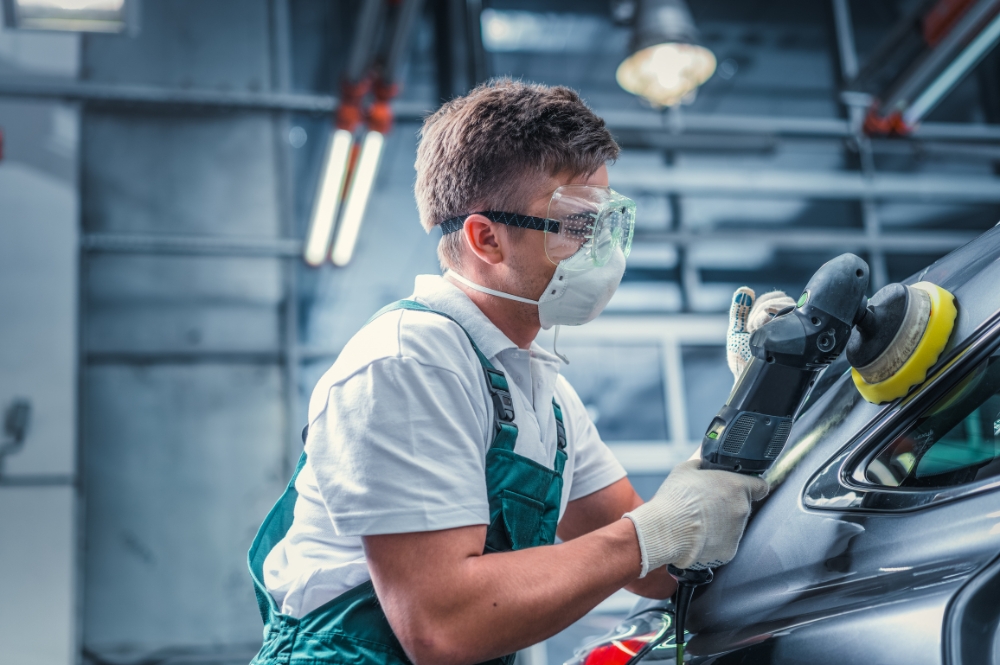
After color evaluation, the base color and clear coat are applied. The finish is then allowed to cure and receives the necessary final correction or polishing.
Reassembly
Removed trim, lights, grilles, handles, moldings, sensors, cameras, and other components are reinstalled. Panel gaps, fasteners, electrical connections, and visible fit are checked during reassembly.
Some components may need programming, testing, aiming, or calibration after installation.
Final Inspection and Delivery
Before delivery, the completed vehicle is inspected for repair quality, exterior finish, alignment, operation of repaired areas, warning indicators, and other items included in the repair plan.
The customer receives information about the completed work and any relevant care instructions for newly painted surfaces.
How Is Hidden Collision Damage Found?
Hidden damage is often identified through disassembly, measurement, diagnostic scanning, and inspection of areas surrounding the impact. A bumper cover, door trim, fender liner, trunk panel, or other component may conceal broken brackets, wiring, bent metal, or structural changes.
Common forms of concealed damage include:
- Broken bumper absorbers or reinforcements
- Damaged mounting brackets and retainers
- Bent supports
- Pinched or disconnected wiring
- Cracked lights or housings
- Misaligned panels
- Structural deformation
- Damaged sensors or cameras
- Wheel or suspension problems
Discovering additional damage does not necessarily mean the initial inspection was incorrect. Some components cannot be evaluated until the damaged area is opened and examined.
How Long Does Collision Repair Take?
Collision-repair time depends on the severity of the damage, required parts, repair procedures, paint curing, electronic work, and insurance authorization. A minor exterior repair generally requires less time than a collision involving structural areas, several panels, suspension, sensors, or hard-to-find parts.
Factors that may affect completion include:
- Vehicle make, model, and year
- Extent of visible and concealed damage
- Parts availability
- Insurance approval
- Structural-repair requirements
- Paint and refinishing work
- Diagnostic scanning
- Sensor or camera calibration
- Wheel, suspension, or glass service
- Additional damage discovered during repair
After disassembly and confirmation of the complete repair plan, the shop can usually provide a more reliable estimated completion timeframe.
How Does an Insurance Collision Claim Work?
The claim process varies by insurer and policy, but it generally begins when the vehicle owner reports the accident. The insurer may request photographs, arrange an inspection, prepare an estimate, or ask the repair facility to submit documentation.
The first insurance estimate may be based only on visible damage. If additional covered damage is discovered after disassembly, the repair shop may prepare a supplement for the insurer to review. Work related to the supplement may depend on authorization.
The vehicle owner remains responsible for understanding the deductible, rental coverage, claim limits, excluded damage, and other policy terms. OC Auto Body Shop can assist with repair documentation and communication while the insurer makes coverage decisions.
Can You Drive a Vehicle After a Collision?
Whether the vehicle can be driven depends on the damage. A minor cosmetic mark may not affect immediate operation, but serious or uncertain damage should be evaluated before driving.
Do not continue driving if the vehicle has:
- Fluid leaks
- Smoke or unusual odors
- Tire or wheel interference
- Loose or hanging body parts
- Broken or obstructed lights
- Steering or braking changes
- A hood, door, or trunk that will not latch
- Broken glass affecting visibility
- Warning lights related to critical systems
- Significant structural or suspension damage
If you are uncertain about the vehicle’s condition, contact the shop before driving it. Towing may be appropriate when the vehicle cannot be operated safely.
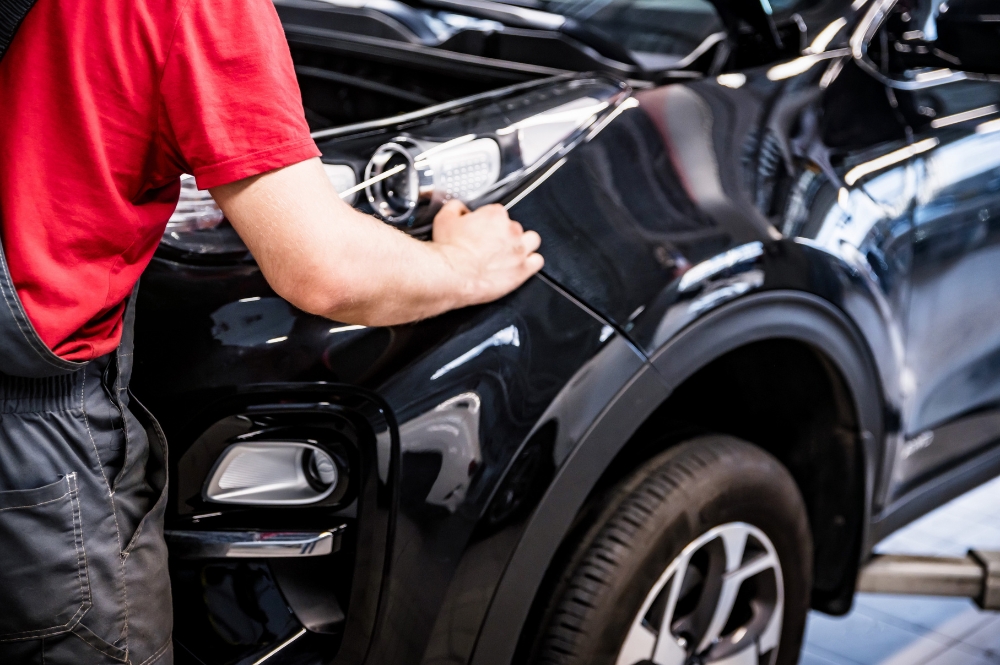
Collision Repair for Orange County Drivers
OC Auto Body Shop provides collision repair from our Fullerton location for drivers throughout northern and central Orange County. We serve customers from Anaheim, Anaheim Hills, Brea, Buena Park, Cypress, Fullerton, Garden Grove, La Habra, Orange, Placentia, Santa Ana, Tustin, Westminster, and Yorba Linda.
Orange County drivers face congested freeways, busy intersections, crowded parking lots, and frequent stop-and-go traffic. Accidents on local streets or routes such as the 5, 57, and 91 freeways can produce damage ranging from bumper scrapes to extensive front, rear, side, and structural repairs.
Our Fullerton location allows customers to coordinate bodywork, painting, bumper service, frame repair, wheel repair, glass replacement, and related collision services through one shop.
Why Choose OC Auto Body Shop?
Collision repair requires coordination between damage assessment, disassembly, bodywork, structural repair, parts replacement, painting, electronic service, insurance documentation, and final inspection.
OC Auto Body Shop provides these connected services from one Fullerton facility. We communicate the repair plan, document additional damage when discovered, work with major insurance companies, and provide applicable warranty coverage according to the repair terms.
Our goal is to complete the repairs identified for the vehicle while keeping the customer informed about damage findings, parts, insurance decisions, and the expected timeline.
Request a Collision Repair Estimate in Fullerton
If your vehicle has been damaged in an accident, contact OC Auto Body Shop for an inspection. Our team can evaluate the visible damage, explain the next steps, and develop a repair plan for your car, truck, or SUV.
Call 714-714-4040 or visit 500 S. Raymond Avenue, Unit G, Fullerton, CA 92831. You can also contact OC Auto Body Shop online to request a collision repair estimate in Fullerton and Orange County.
FAQs
1. What should I do immediately after a car accident?
Move to a safe location if possible, check for injuries, contact emergency services when needed, exchange required information, photograph the vehicles and scene, and report the accident to your insurer. Do not drive a vehicle that appears unsafe.
2. Can OC Auto Body Shop work with my insurance company?
Yes. OC Auto Body Shop works with major insurance companies and can provide estimates, photographs, repair documentation, and supplemental damage information. The insurer determines coverage according to the policy and claim.
3. What is a collision repair supplement?
A supplement is documentation for additional damage or repair operations discovered after the original estimate. The repair facility submits the information to the insurer for review when it relates to an insurance claim.
4. How much does collision repair cost in Orange County?
The cost depends on the vehicle, damage severity, required labor, parts, paint, structural work, electronic systems, and concealed damage. A detailed inspection and disassembly may be necessary before the complete cost is known.
5. How long will my collision repair take?
Repair time depends on the extent of damage, parts availability, insurance approval, structural work, refinishing, and electronic service. A reliable timeline can usually be provided after the vehicle has been inspected and the repair plan confirmed.
6. Can collision damage be hidden?
Yes. Bumpers, panels, trim, and interior components can conceal damaged brackets, wiring, reinforcements, structural sections, sensors, and other parts. Disassembly and measurement may be required to identify the full extent of the damage.
7. What is the difference between frame repair and body repair?
Body repair generally addresses exterior panels and related cosmetic damage. Frame or structural repair addresses the underlying sections that support the vehicle and maintain its dimensions. Some accidents require both types of work.
8. Will my vehicle need calibration after collision repair?
Calibration may be required when a collision or repair affects certain cameras, sensors, radar-related components, glass, suspension settings, or mounting positions. Requirements depend on the vehicle and manufacturer procedures.
9. Will the repaired panels match my vehicle’s paint?
The vehicle’s paint information and current finish are evaluated to select an appropriate color. Age, fading, previous repairs, and metallic or pearl finishes may require additional adjustment or blending.
10. Where is OC Auto Body Shop located?
OC Auto Body Shop is located at 500 S. Raymond Avenue, Unit G, Fullerton, CA 92831. The shop provides collision repair, bumper repair, frame repair, auto painting, dent repair, detailing, glass replacement, and related services for Orange County drivers.